
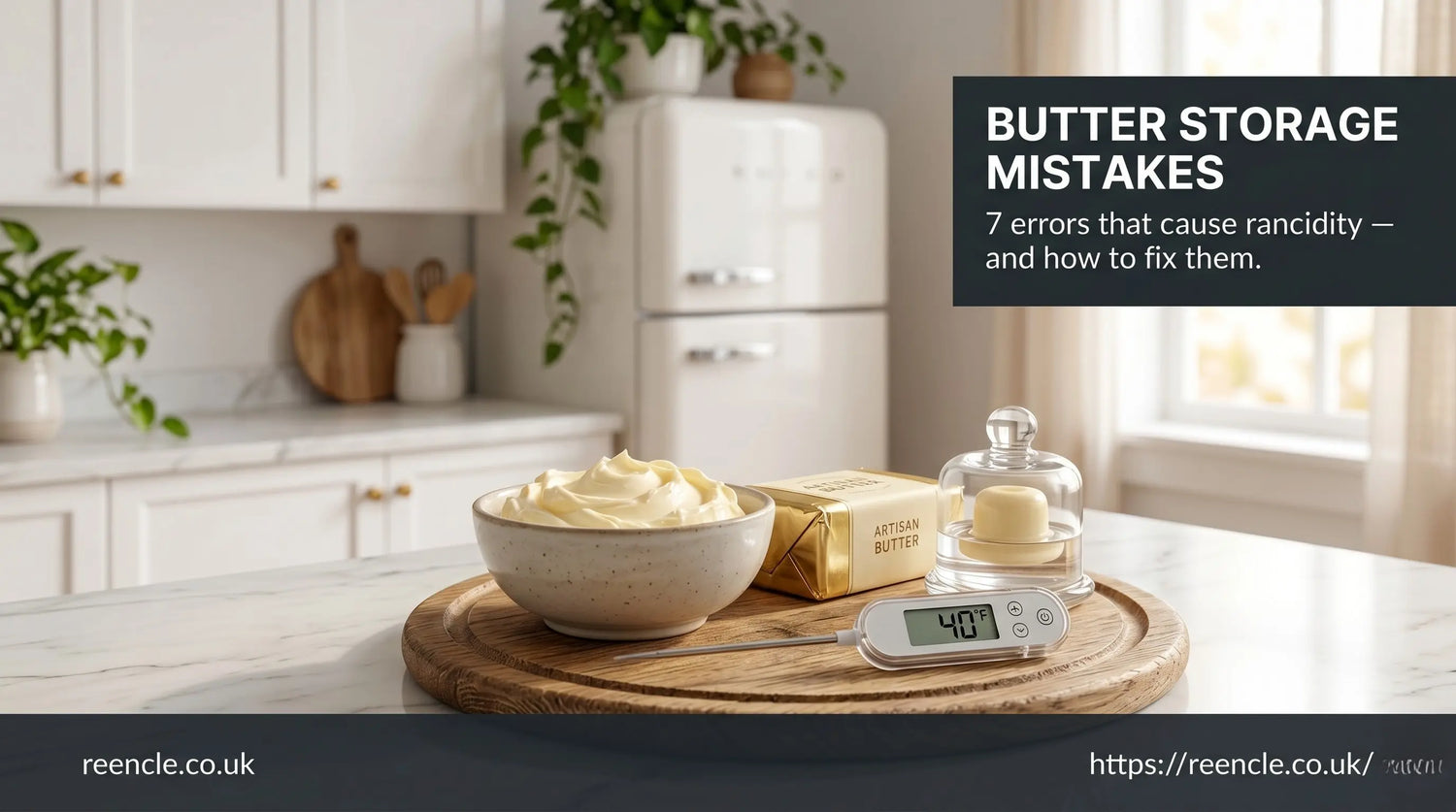
7 Butter Storage Mistakes to Avoid
Butter doesn't go bad the way meat or fish does — it goes rancid. Most of us make at least one storage mistake that cuts its shelf life in half. Here's what actually matters.
 Contents
Storing Unsalted Butter on the Counter
Unsalted butter does not belong on your kitchen counter, even in a covered dish. Salt is a natural preservative — it inhibits oxidation and reduces the moisture that feeds bacterial growth. Unsalted butter has none of that protection.
Unsalted butter stays safe on the counter for 1 to 2 days maximum. Beyond that, oxidation takes over and the butter begins turning rancid. Salted butter can handle 1 to 2 weeks on a covered counter below 77°F. If you use unsalted butter regularly, keep it in the fridge and measure out what you need. If you bake often and want spreadable butter, buy salted instead — or refrigerate unsalted and pull out a stick 30 minutes before you need it.
Storing Opened Butter Without Wrapping It
Once you cut into a stick of butter, the clock on oxidation starts ticking. The exposed surface is now in direct contact with oxygen. Worse, butter absorbs smells from nearby foods — that garlic or fish odor transfers to the fat and ruins the butter's flavor for baking.
Opened butter that sits exposed in the fridge typically goes rancid within 2 to 3 weeks, well before the full 1 to 3 months that sealed butter enjoys. Wrap opened sticks tightly in plastic wrap or foil, or keep them in a sealed butter keeper. Foil is actually better than clear plastic because it blocks light, which accelerates oxidation.
Storing Butter Near Strong-Smelling Foods
Butter fat is highly absorbent. A stick sitting next to onions, fish, or fermented foods will pick up those volatile compounds and carry the smell straight into your baked goods. You'll make a perfect chocolate cake and it'll taste faintly of garlic.
This isn't a food safety issue — the butter isn't spoiled — but it ruins whatever you cook with it. Store butter in an airtight container or sealed bag in a designated spot away from pungent foods. If your fridge is cramped, a small sealed container dedicated to butter is worth the space.
Leaving Butter Exposed to Light
Light accelerates oxidative rancidity. Butter in a clear plastic wrapper or left uncovered degrades faster than butter wrapped in foil or stored in a sealed container. This is why commercial butter is often wrapped in foil — it's not just for looks.
If you store butter on the counter in a clear dish, switch to an opaque butter bell or crock. The French butter crock design (butter inverted into a cup of water, creating an airtight seal) keeps butter soft for 1 to 2 weeks while blocking light completely. Change the water every few days.
Thawing Frozen Butter at Room Temperature

When you thaw butter on the counter, the outer layers soften and begin oxidizing before the center thaws. You end up with a partially rancid exterior and a cold center — and you've wasted the whole stick.
Thaw frozen butter overnight in the fridge instead. Plan ahead, or cut butter into tablespoon-sized pats, freeze individually, and grab what you need. Room-temperature thawing works fine for shortening or coconut oil, but butter's high fat content makes it vulnerable to oxidation during the slow thaw.
Not Labeling Frozen Butter
Freezer labeling sounds trivial until you pull out a stick of butter six months in and realize you have no idea when you froze it. Butter can technically last 6 to 12 months frozen, but quality declines after that. Opened or repackaged butter lasts 6 to 9 months for best quality. Without a date, you're guessing.
Write the freeze date on the wrapper or label before you freeze. This takes 10 seconds and saves waste.
Keeping Opened Butter Too Long Before Freezing
If butter is approaching its best-by date and still sealed, freezing it immediately is a smart move — the freezer pauses oxidation and extends its life significantly. But opened butter that's been sitting in the fridge for weeks should not go in the freezer. It's already oxidizing. Freezing won't slow rancidity that's already underway.
If you open a stick of butter and know you won't use it within 2 to 3 weeks, freeze it that same week while it's still fresh. Waiting defeats the purpose. Freezing fresh butter extends its life. Freezing butter that's halfway to rancid just preserves the problem.

How to Spot Rancid Butter Before It Ruins Your Recipe
- Smell: Fresh butter has a clean, mild, creamy smell. Rancid butter smells sour, paint-like, or metallic. A slightly cheese-like or tangy aroma is early rancidity — butyric acid from fat breakdown. If you open the wrapper and recoil, discard it.
- Color: A small yellow or discoloured outer layer is surface oxidation — not necessarily spoilage. You can often scrape this off and use the interior for cooking. But if the discoloration has spread throughout, toss it.
- Taste: Rancid butter won't make you sick — oxidized fats aren't a food safety hazard — but they will ruin the taste of whatever you're making. If something tastes off, it's not worth using.
Quick Reference
Storage Timeline at a Glance
The bottom line
Wrap opened butter tightly, keep it away from strong-smelling foods, label before freezing, and never leave unsalted butter on the counter. Four habits that keep butter fresh for months longer than most people manage.
Next step: If you're looking to reduce food waste beyond the pantry, the Reencle composter handles the scraps you can't save.
Explore the Reencle Composter →

Leave a comment
This site is protected by hCaptcha and the hCaptcha Privacy Policy and Terms of Service apply.