
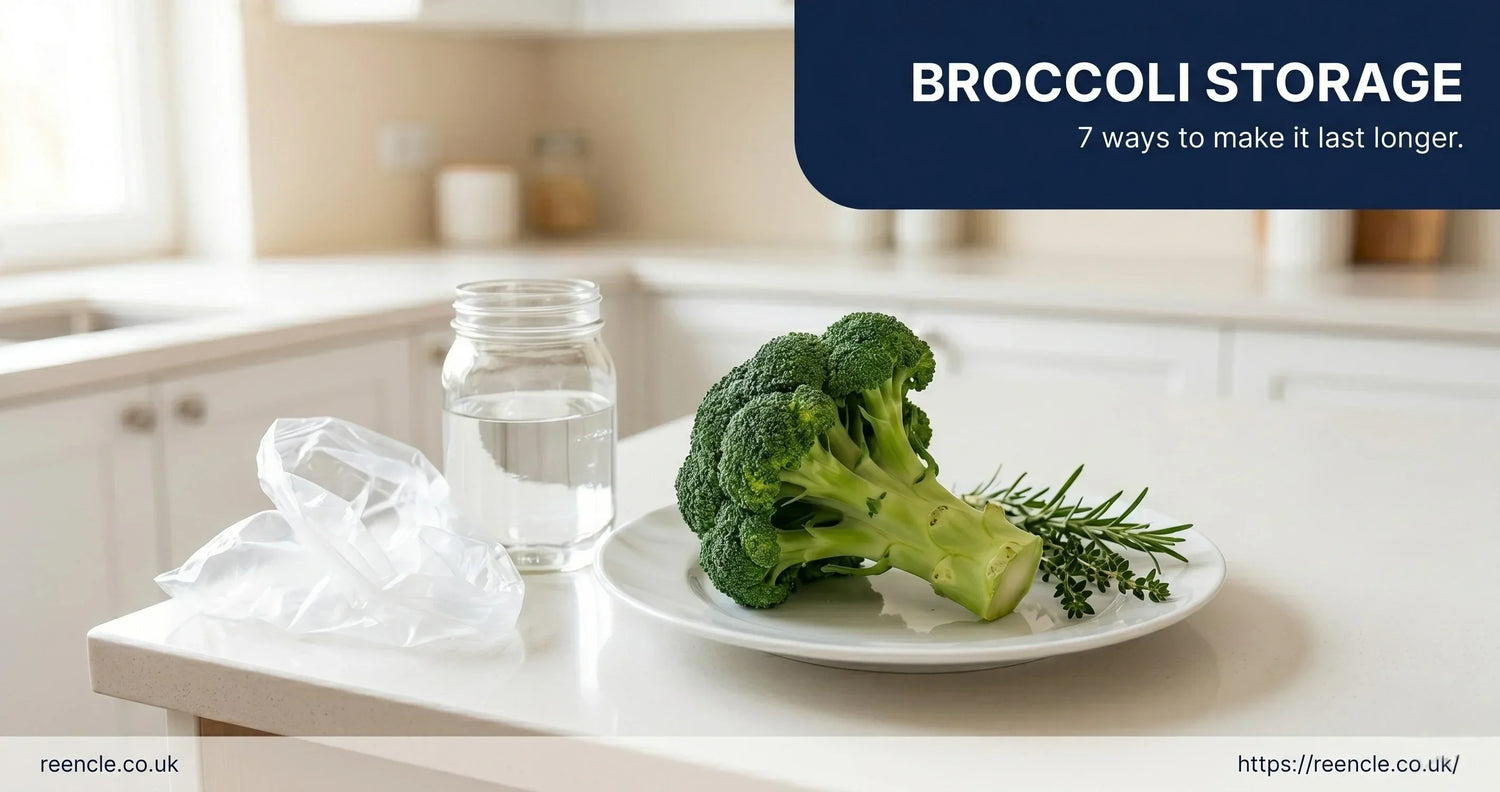
7 Tips to Keep Broccoli Fresh Longer
Broccoli wilts, yellows, and gets soft faster than you'd expect. A few small changes to how you store it can add days to its life — here's what actually works.
Broccoli wilts, yellows, and gets soft faster than you'd expect. A head that looks fine in the produce section can turn limp and bitter within days. The difference between broccoli that lasts a week and broccoli that lasts 2 days comes down to storage technique. Apply these 7 methods, and you'll pull green, crisp broccoli from your fridge days longer than you thought possible.
 Contents
Use the Water Glass Method for Maximum Freshness
The water glass method is the single best way to store whole broccoli heads. It keeps the florets crisp and green while the stem stays hydrated — exactly how florists keep fresh-cut flowers alive.
How to do it
- Trim a small amount off the bottom of the stem
- Place the head upright in a jar with 1 to 2 inches of cold water
- Drape a loose plastic bag over the florets — don't seal it
- Refrigerate and change the water every 1 to 2 days
The cut stem absorbs water, hydrating the broccoli from the inside. The loose plastic lets some air through while reducing moisture loss. If you only remember one tip, this is it.

Never Wash Broccoli Before Storing
Washing broccoli before refrigeration is a mistake. Water gets trapped in the tight florets, creating ideal conditions for mould and bacteria. The vegetable will spoil days earlier than unwashed broccoli.
Wash broccoli immediately before cooking or eating, not when you store it. Those tightly packed florets have minimal air circulation — trapped water becomes a breeding ground for decay.
Keep Broccoli Away From Ethylene-Producing Fruits
Ethylene is a plant hormone that ripens fruits and accelerates ageing in vegetables. Apples, bananas, and avocados are heavy ethylene producers. Proximity to these fruits dramatically speeds broccoli yellowing.
Store broccoli on a different shelf or in a different drawer. This one change isn't dramatic, but combined with other methods it makes a real difference. The same principle applies across fridge food safety best practices — correct separation slows deterioration across the board.

Store in Loose or Perforated Bags, Not Sealed
Sealed airtight bags trap moisture, and the ethylene gas broccoli produces on its own. Both speed decay and yellowing. Loose bags or perforated plastic bags allow air circulation while preventing excessive moisture loss.
If using pre-cut florets, wrap them loosely in a slightly damp (not soaking wet) paper towel and place in a perforated bag.
Adjust Your Crisper Drawer Settings
If you store broccoli in the crisper drawer, set it to low humidity (vent open). The high-humidity setting traps ethylene gas, accelerating yellowing. The water glass method works better overall, but low-humidity crisper storage is acceptable.
High humidity is meant for leafy greens that need moisture. Broccoli is different — it benefits from some air circulation.
Blanch and Freeze for Long-Term Storage
If you have too much broccoli to use fresh, freezing extends its life dramatically. Blanching (brief boiling) deactivates enzymes that cause discolouration and off-flavours during freezer storage.
How to blanch
- Boil florets for 3 minutes (2 minutes for small pieces, 3 for stems)
- Immediately plunge into ice water for 3 minutes to stop cooking
- Dry thoroughly with paper towels
- Spread on a baking sheet and freeze 1–2 hours until solid
- Transfer to freezer bags, press out air, label and date
Revive Limp Broccoli With Cold Water
If your broccoli starts to wilt before you use it, don't throw it out. Trim the stem and place it in a glass of cold water in the fridge for a few hours. The broccoli will absorb water through the cut stem and regain firmness.
This won't fix yellowing or mushy florets, but it restores crispness to broccoli that's just lost moisture — the same principle as the water glass storage method.

Yellowing vs. Spoilage
Yellowing is a quality issue, not a safety issue. Chlorophyll breaks down naturally as broccoli ages, starting with the crowns. Yellowed broccoli is safe to eat, but it tastes more bitter and has lost some nutritional value. Use it in cooked dishes — soups, stir-fries, casseroles — where colour matters less.
- Yellowing only: Quality issue, not safety. Safe to eat in cooked dishes.
- Slimy texture: Bacterial spoilage. Discard immediately.
- Sour smell: Bacterial spoilage. Discard.
- Fuzzy mould growth: Discard the entire head — not just the affected area.
Why Broccoli Is One of the UK's Most Wasted Vegetables
Fresh vegetables and salad are the single largest category of food thrown away in UK households by weight, accounting for 28% of all household food waste, according to WRAP. Broccoli features on that list by name — WRAP specifically identified it as one of the five most commonly wasted fresh produce items in UK homes.
In an 18-month study, WRAP found that simple changes — selling broccoli loose rather than in plastic bags, and improving storage guidance could contribute to preventing around 100,000 tonnes of household fresh produce waste per year across the UK. Packaging matters because pre-bagged broccoli forces people to buy more than they need. But how you store what you buy matters just as much.
The storage gap is almost entirely a knowledge problem. Most people keep broccoli the wrong way - sealed bag, back of the fridge, next to the fruit bowl - then wonder why it's yellow by day three. The water glass method costs nothing and takes 30 seconds. It just isn't what anyone taught us.
Quick Reference
Storage at a Glance
FAQ
Common Questions
The bottom line
Broccoli storage success comes down to one principle: keep it hydrated and let it breathe. The water glass method nails both. If you adopt nothing else, use it for whole heads, and you'll get 5–7 days of crisp, green broccoli instead of 2–3 days of wilted decay.
And the scraps? Broccoli stalks, tough outer leaves, yellowed florets, and prep trimmings all add up — even in a well-managed kitchen. Rather than sending that food waste to a landfill, a home composter converts it into nutrient-rich compost in as little as 24 hours. It's the natural next step once you've squeezed every day out of your fresh produce.
Explore the Reencle Composter →

Leave a comment
This site is protected by hCaptcha and the hCaptcha Privacy Policy and Terms of Service apply.