
7 Ways to Make Mushrooms Last Longer

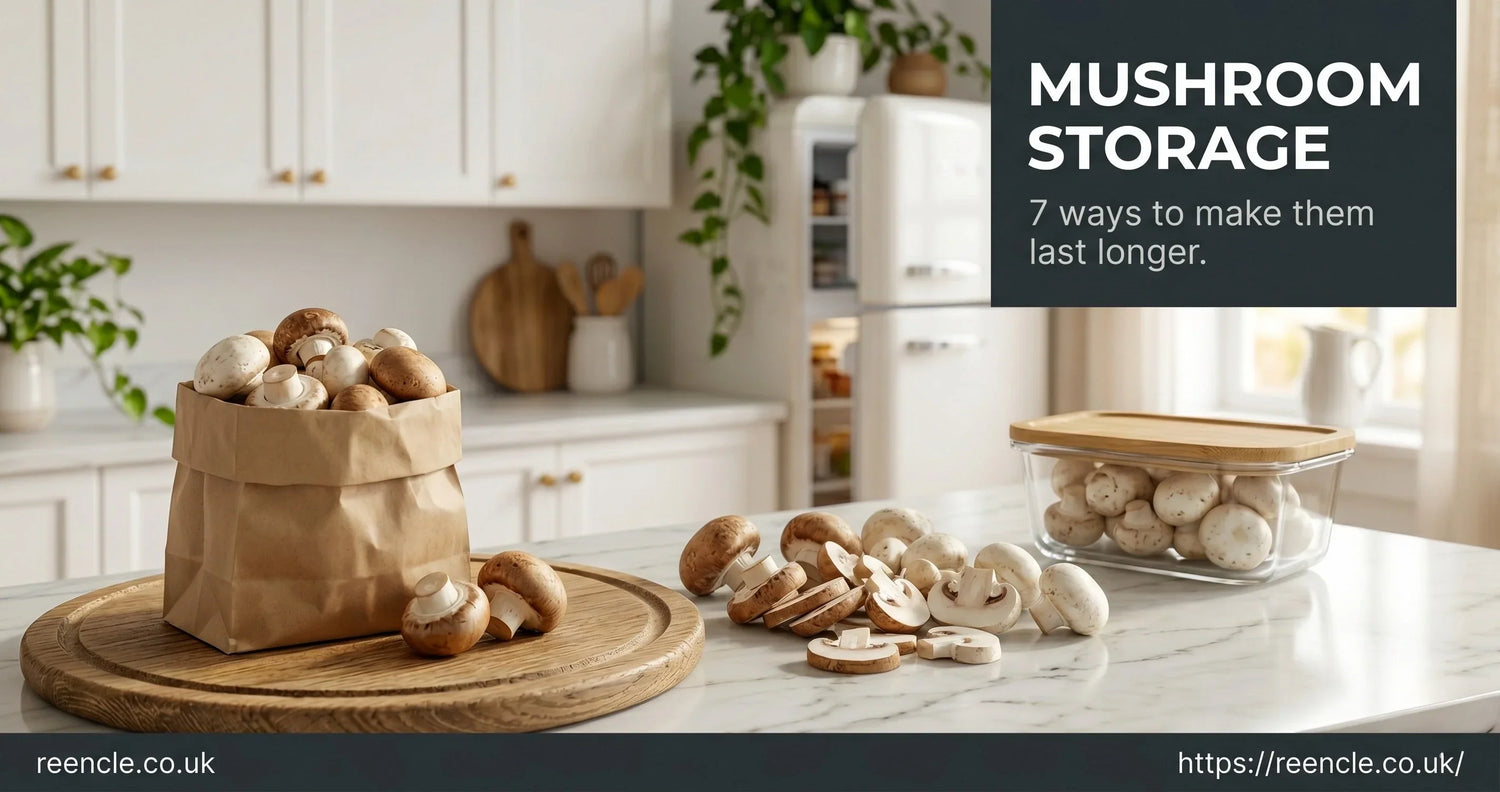
Fresh mushrooms on a wooden board next to a paper bag and glass container, with an open refrigerator in the background — illustrating proper mushroom storage methods.
Food Storage

7 Ways to Make Mushrooms Last Longer


Mushrooms are 90% water, and most people store them in the worst possible way. A few small changes can add days to their life — here's what actually works.

Fresh mushrooms in a brown paper bag on a wooden surface with an open refrigerator door visible in the background.Mushrooms are 90% water, and that's the root of every storage problem. Too much moisture and they turn slimy. Too little and they shrivel within a day. Most people store them in plastic bags — which is one of the worst things you can do. A few small changes add days to their life. Fresh whole mushrooms normally last 4 to 7 days in the fridge. With the right method, you can push that to 7 to 10 days.
Tip 01

Use a Paper Bag Instead of Plastic

This is the single most effective change you can make. Transfer mushrooms from the plastic container they came in to a paper bag. Paper absorbs excess moisture while allowing air circulation — plastic bags do the opposite, creating a humid chamber where bacteria thrive.

Why it works: Mushrooms release moisture through ongoing cellular respiration. In a sealed plastic bag, that moisture has nowhere to go. It condenses on the surface and creates the slime you're trying to avoid. Paper breathes and absorbs excess condensation, while still preventing the shrivelled look of uncovered mushrooms. This single switch extends mushroom life by 2 to 3 days.
Flat design comparison: mushrooms in paper bag labeled "Absorbs Moisture" with green check, mushrooms in sealed plastic bag labeled "Traps Moisture→Slime" with red X.

Storage tip: Keep the paper bag in the main body of the fridge, not the crisper drawer. Loosely close it — don't seal it shut.
Tip 02

Don't Wash Mushrooms Before Storing

Mushrooms act like sponges. Washing them before storage means they absorb and retain water throughout their entire storage life. That extra moisture accelerates bacterial growth and sliminess from day one.

When to wash: Clean mushrooms immediately before cooking — not before storing. A brief rinse under cold water followed by a quick pat-dry with paper towel is fine. Do not soak them. For storage, simply remove visible dirt with a slightly damp paper towel if needed.

Avoid: Soaking mushrooms at any point, even just before cooking. A quick rinse and dry is always sufficient.
Tip 03

Avoid the Crisper Drawer

High-humidity crisper drawers are designed for vegetables like lettuce and broccoli. For mushrooms, they're exactly the wrong environment. The sealed humidity traps the excess moisture that mushrooms naturally release, creating the slimy conditions you're trying to prevent.

Store mushrooms on a regular shelf in the main body of the fridge where air circulation is better. If you only have drawer space, leave it slightly ajar to increase airflow.

The crisper drawer actively works against mushroom longevity. A middle shelf position is always better.
Tip 04

Blanch Before Freezing for Better Texture

Raw mushrooms don't freeze well. Ice crystals rupture the cell walls, and you end up with a mushy, waterlogged mess after thawing. Blanching solves this.

The method:

  • Clean mushrooms and cut to size
  • Boil for 1–2 minutes (whole) or 30 seconds (sliced)
  • Immediately plunge into ice water to stop cooking
  • Drain thoroughly and pat dry
  • Spread on a baking sheet and freeze until solid (1–2 hours)
  • Transfer to freezer bags, pressing out air. Label and date
Flat design diagram: mushroom with water droplet and red X labeled "Don't Wash", next to mushroom with dry paper towel and green check labeled "Dry Only Before Cooking".Blanching removes most surface water and sets the cell structure before freezing. Properly blanched mushrooms last 10 to 12 months in the freezer.
Tip 05

Sauté Mushrooms Before Freezing for Even Better Results

Sautéeing produces superior texture compared to blanching. Cook mushrooms in butter or oil until they release their water and just start to brown. The heat breaks down cell walls in a controlled way and removes water before freezing even begins.

Cool completely, portion, freeze. Sautéed frozen mushrooms maintain good texture and flavour for 10 to 12 months and are ready to use straight from the freezer — no thawing needed in most dishes.

Best for: Soups, stir-fries, pasta, and omelettes where texture matters. Worth the extra step.
Tip 06

Store Sliced Mushrooms Between Paper Towels

Sliced mushrooms have more exposed surface area, so they need more attention. Layer them between slightly damp paper towels in a container with ventilation holes or a loosely placed lid. The paper absorbs excess condensation while preventing cut surfaces from drying out too quickly.

Replace the paper towels every 2 to 3 days if they become wet. This method keeps sliced mushrooms usable for 5 to 7 days instead of the typical 3 to 5 days.

Step-by-step flat infographic: 1) Blanch 2) Ice Bath 3) Dry 4) Flash Freeze 5) Bag 6) Label with "10-12 months" timeline at end.

Don't skip checking the paper towels. Wet towels pressed against sliced mushrooms accelerate the sliminess you're trying to prevent.
Tip 07

Buy Whole Mushrooms Instead of Pre-Sliced

Store-bought pre-sliced mushrooms are often 2 to 3 days old by the time you buy them. That means you might have just 1 to 2 days of real usable life left — not the 3 to 5 days the label implies. Whole mushrooms from the same shelf are fresher. Slice them at home immediately before cooking and you get the full storage window.

Farmers' market mushrooms last even longer — often harvested 12 to 36 hours before sale, while grocery store mushrooms may have been in distribution for 3 to 5 days already.

Whole mushrooms from the same shelf are almost always fresher. Buy whole when you can and slice at home just before cooking.
By Variety

Mushroom Storage by Type

Some varieties naturally last longer. King trumpet (king oyster) mushrooms have lower moisture content and last 7 to 14 days — well beyond button, cremini, or portobello mushrooms at 4 to 7 days. Shiitake and oyster mushrooms fall in between at 5 to 7 days.

  • King Trumpet (King Oyster): 7–14 days — lowest moisture content, best shelf life
  • Shiitake & Oyster: 5–7 days — good middle-ground option
  • Button, Cremini & Portobello: 4–7 days — most common, shortest-lived
Watch For

Signs It's Time to Discard

  • Slimy or wet surface: Bacterial growth. Discard immediately.
  • Dark brown or black spots: Advanced oxidation and decay. Discard.
  • Sour or ammonia-like smell: Bacterial spoilage. Discard.
  • Fuzzy mold: Discard the entire batch — not just the affected pieces.
  • Shrivelled but no off-odour: Just moisture loss. Not necessarily unsafe, but poor quality — your call.
  • Slight browning on cut surfaces: Oxidation, not spoilage. If it smells earthy and feels firm (not slimy), it's usable.
When in doubt, throw it out. Mushrooms are inexpensive. A foodborne illness is not worth the savings.

Quick Reference

Storage at a Glance


Situation Duration
Whole fresh mushrooms in fridge 4–7 days
Sliced fresh mushrooms in fridge 3–5 days
Paper bag storage (adds) +2–3 days
Cooked mushrooms in fridge 3–5 days
Blanched or sautéed frozen mushrooms 10–12 months
Dried mushrooms in pantry 1–3 years
🍄

The bottom line

Switch to a paper bag, keep mushrooms on a middle shelf (not the crisper), and don't wash them until you're ready to cook. Those three changes alone extend freshness by several days. For longer storage, sautéeing before freezing gives you the best texture by far.

And the scraps? Mushroom trimmings and past-their-prime pieces don't need to go straight in the bin. A food waste composter turns them into something useful instead.

Explore the Reencle Composter →
Reading next

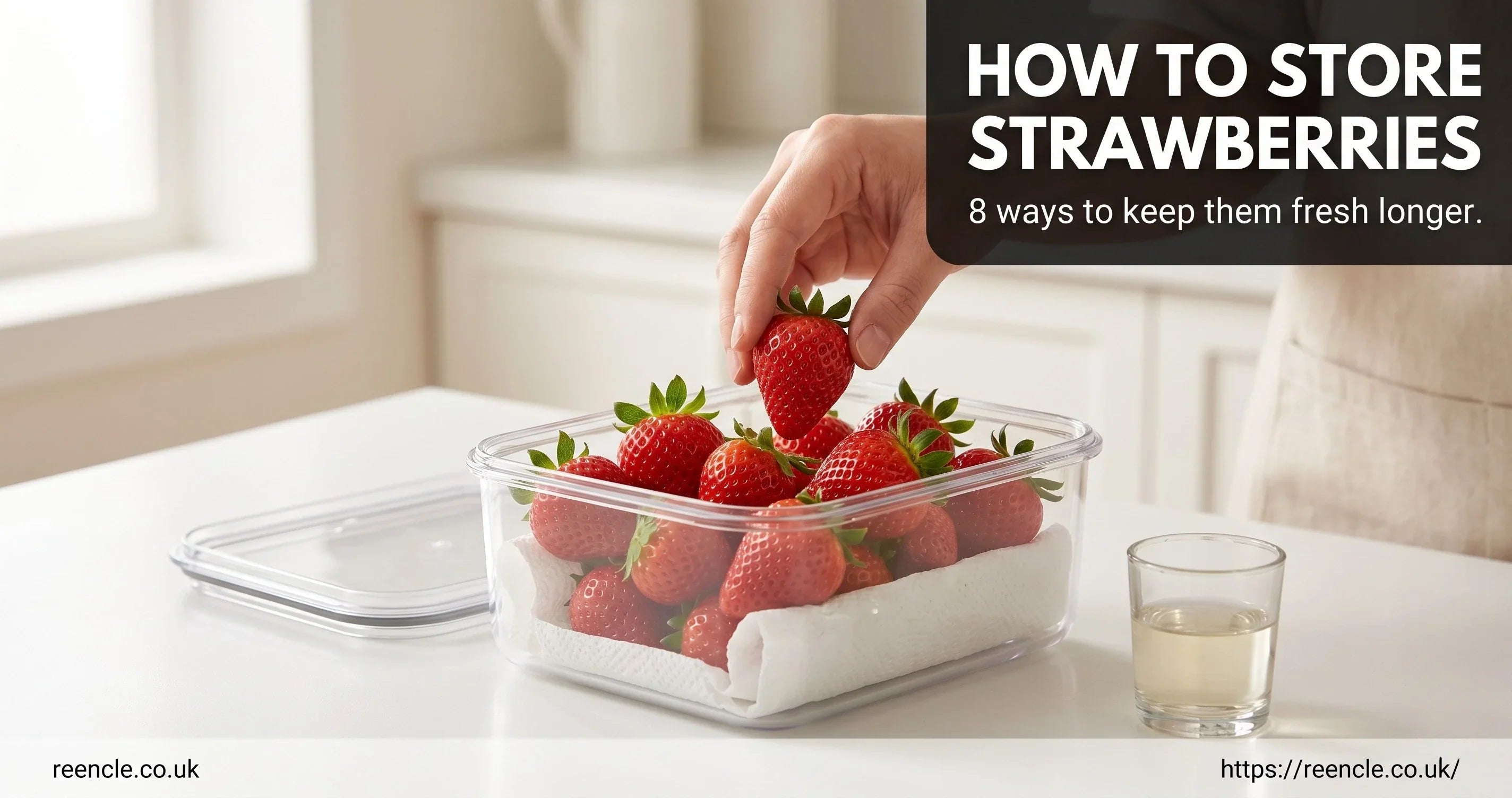
Person's hand placing a fresh strawberry into a clear lidded container lined with kitchen roll on a white kitchen counter, with a small glass of white vinegar beside it
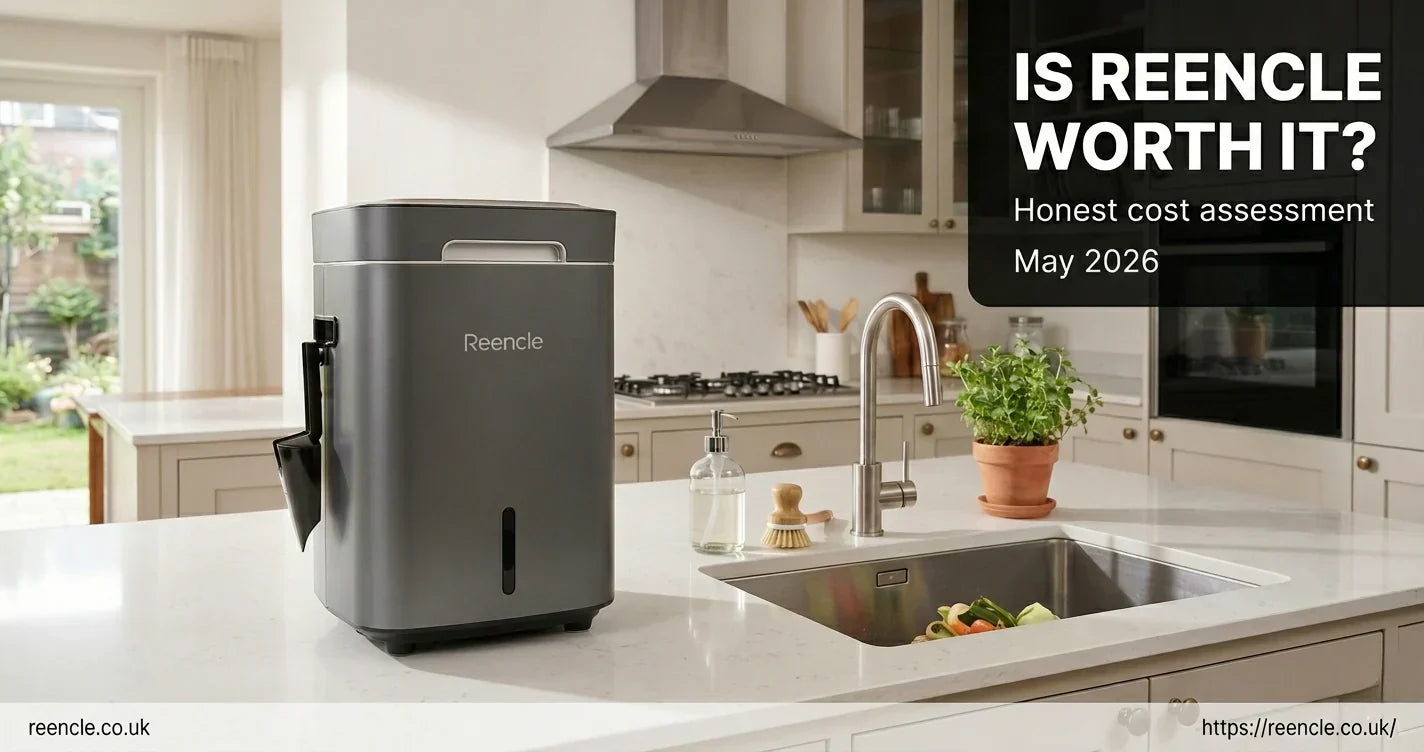
Dark grey Reencle composter on the left side of a white kitchen worktop next to a sink, with a prominent black text overlay box on the right side.

Leave a comment

This site is protected by hCaptcha and the hCaptcha Privacy Policy and Terms of Service apply.