
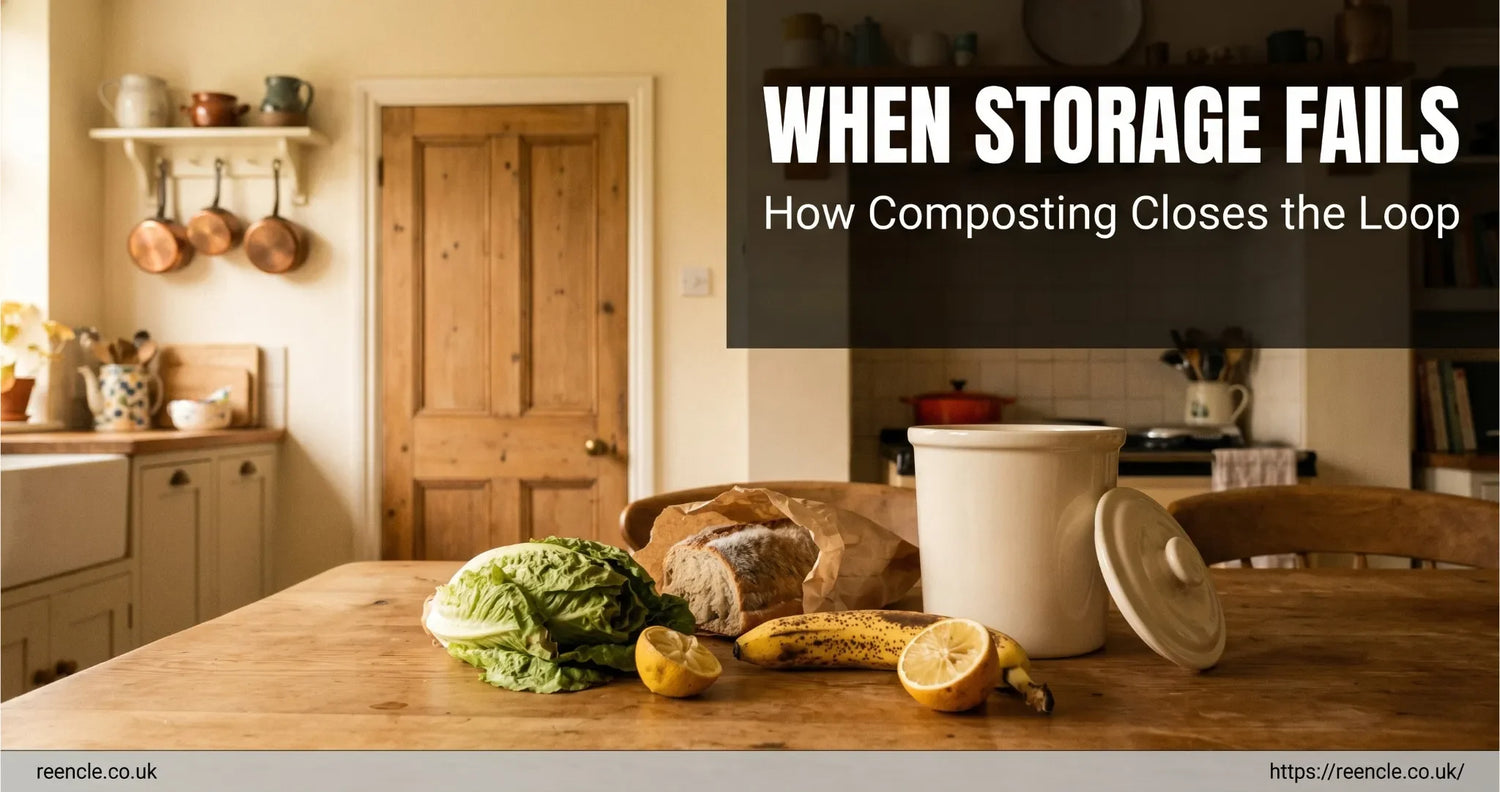
When Food Storage Fails: How Composting Closes the Loop
The average UK family throws away £700 of food every year. Your fridge is not enough, and composting turns wasted food into something living again.
 The average UK family bins roughly £700 of edible food every single year (Love Food Hate Waste). Scale that up nationally and the figure becomes dizzying: UK households throw away between 9.5 million and 10.7 million tonnes of food annually (WRAP). According to the Royal Horticultural Society and WRAP, around 70% of that waste could have been eaten, contributing to roughly 25 million tonnes of greenhouse gas emissions (Royal Horticultural Society).
Most home cooks already care about reducing waste. The problem is that food spoils despite our best intentions. Fridges malfunction. Labels confuse us. Life gets busy. Good intentions meet storage failures, and another bag of spoiled food hits the bin with that quiet, familiar guilt.
We will look at why food storage fails in British homes, how fridge temperatures and label confusion accelerate the problem, and why some waste is simply inevitable. Then we move to the solution. Composting closes the loop. It takes the food that storage could not save and transforms it into living soil. By the end, you will understand not just how to store food better, but what to do when storage fails, including how a modern food waste composter can become the safety net your kitchen needs.
Contents
Why Food Storage Fails in UK Homes: The £700-a-Year Problem
British households are fighting a losing battle against food waste. WRAP estimates that UK homes discard between 9.5 million and 10.7 million tonnes of food each year (WRAP). Love Food Hate Waste puts the average family cost at £700 annually (Love Food Hate Waste). The RHS and WRAP jointly note that roughly 70% of this waste is avoidable, meaning it was edible at some point before disposal (Royal Horticultural Society).
These numbers have faces. Unused loaves of bread. Forgotten bags of salad. Leftovers that sat too long behind the milk. Households across the country try. They buy cling film, stack the fridge neatly, promise to eat tomorrow's curry. Still the waste persists.
Food storage is not perfect. Refrigeration slows spoilage but does not stop it. Packaging traps moisture and breeds mould. Busy schedules mean we forget what is lurking in the salad drawer. Even the most organised home cook cannot monitor every tomato and yoghurt pot.
The Cold Truth About Your Fridge: Why 5.3°C Is Too Warm
Your fridge is probably too warm. The Food Standards Agency's Kitchen Life 2 study found that the average UK fridge runs at 5.3°C (Food Standards Agency). That is already above the recommended maximum of 5°C. The study looked at 65 households and found that 34 of them had fridges above 5°C. Eight households had fridges running above 8°C (Food Standards Agency).
This matters because of the danger zone. The FSA defines the danger zone as between 5°C and 63°C, the temperature range in which bacteria multiply rapidly (Food Standards Agency). At 8°C, bacteria such as listeria can double in number alarmingly fast. Your food is not being preserved so much as incubated.
The FSA recommends keeping fridges at 0-5°C, and freezers at -18°C (Food Standards Agency). Yet most people never check. They assume the dial marked "3" is fine. They place the fridge next to the oven or in direct sunlight. They overload it so air cannot circulate.
Buy a fridge thermometer. Place it on the middle shelf, not the door. Check it after 24 hours. If it reads above 5°C, turn the dial down. Remember that the top shelf is typically the warmest because warm air rises every time you open the door.
Use-By vs Best-Before: The Confusion Costing You Money
One of the fastest ways to turn edible food into bin waste is to misread the label. In the UK, two dates dominate packaging: use-by and best-before. They mean entirely different things.
A use-by date is about safety. It is found on perishable foods like meat, fish, and ready meals. Eating food past its use-by date risks food poisoning because harmful bacteria may have multiplied to dangerous levels. You cannot smell or see listeria or salmonella, so this date must be treated as a hard rule.
A best-before date is about quality. It appears on dried, tinned, or longer-life foods like pasta, biscuits, and pickles. The food is safe to eat after this date. It might lose crunch or flavour, but it will not harm you. The FSA advises using your senses: look, smell, and taste (Food Standards Agency).
This confusion feeds directly into waste. Remember that 70% of UK food waste could have been eaten (Royal Horticultural Society). A huge chunk of that is perfectly good food binned because the best-before date passed yesterday. Families throw away bread, cheese, and vegetables that are still safe because the label looked authoritative.
For best-before dates, trust your senses. For use-by dates, obey the label or compost the item.
The Storage Mistakes Everyone Makes (And How to Fix Them)
Even with the right temperature and label knowledge, physical storage errors ruin food fast.
Overfilling the fridge. When shelves are packed tight, cold air cannot circulate. Warm pockets form. The compressor works harder. Food in the back goes unnoticed until it rots. Leave gaps between items and adopt a first-in, first-out rotation system.
Wrong shelf placement. Raw meat should always sit on the bottom shelf in a sealed container. Juices dripping onto ready-to-eat food below are a major source of cross-contamination. Dairy should not live in the door; it is the warmest, most temperature-variable spot. Put meat at the bottom, dairy on middle shelves, ready-to-eat on top.
Poor container choices. Uncovered bowls of leftover curry dry out and absorb fridge odours. Original packaging often traps moisture, accelerating mould on bread and cheese. Transfer leftovers to airtight containers. Wrap cheese in baking paper, not cling film, so it can breathe. Store bread cut-side down on a board or in a paper bag to slow staling.
These fixes help, but they demand constant vigilance. A busy household with children, shift work, and packed schedules will slip. That is not a moral failing. It is reality.
When Prevention Is Not Enough: The Inevitable Waste
Let us be honest. No amount of meal planning eliminates spoiled food entirely.
Life intervenes. You go away for the weekend and forget the milk. A bulk buy of bananas ripens faster than a family can eat them. The power cuts out for six hours while you are at work. You cook a large curry, store it properly, and still cannot finish it before mould appears on day four.
The guilt spiral is familiar. You open the fridge to find wilted lettuce, a furry loaf of bread, or sour milk. You know it is headed for the general waste bin. You know that is bad. But until recently, what choice did you have?
When food waste reaches landfill, it decomposes without oxygen. This anaerobic process releases methane. According to the RHS, methane is 25 to 28 times more potent than carbon dioxide as a greenhouse gas (Royal Horticultural Society). Your spoiled leftovers are not just wasted money. They are actively heating the planet.
Composting: Turning Failure Into Fertility
There is a better destination for spoiled food than landfill. Composting closes the loop by taking waste and returning it to the earth as a resource.
Food fails in storage. It enters a composting system. Microorganisms break it down. The result is compost, a nutrient-rich material that feeds soil. That soil grows new food. The loop begins again.
Crucially, composting is aerobic. When oxygen is present, food waste breaks down into carbon dioxide, water, and organic matter. It does not produce methane. The same banana skin that would generate potent greenhouse gases in landfill instead becomes a soil amendment in a compost heap or bin (Royal Horticultural Society).
The UK is finally catching up. By March 2026, all English councils will be required to provide weekly food waste collections (Royal Horticultural Society). This is a major shift. Nearly half of UK councils did not previously collect food waste separately (Royal Horticultural Society). The legislation recognises that households need an outlet for the food storage that cannot be saved.
What You Can Compost from Storage Failures
Almost everything that fails in your fridge can be composted. Mouldy bread, wilted vegetables, spoiled fruit, cooked leftovers, meat, fish, dairy, eggshells, and coffee grounds. The lot.
Traditional outdoor compost heaps struggle with some of these items, however. Meat and dairy attract rats and foxes. They produce foul odours as they break down. They require high temperatures to decompose safely, which a small garden heap rarely reaches. An open pile in a British suburb is not the place for last week's chicken carcass or mouldy cheese.
Modern composting systems solve this. Hot composting bins reach higher temperatures. Bokashi systems ferment food before it enters the soil. Electric indoor composters use controlled conditions and filtration to process all food types without pests or smells.
Composting Without a Garden: The Urban Solution
You do not need a garden to compost. Urban and rented households have more options than ever.
Council food waste caddies are the simplest solution. With the March 2026 legislation mandating weekly collections across England, most flat dwellers will soon have a dedicated food bin (Royal Horticultural Society). You line the caddy with compostable bags, fill it with scraps, and leave it for collection. The council handles the industrial composting.
Wormeries work well for vegetable scraps in small spaces. They are compact, odourless when managed, and produce excellent vermicompost. They struggle with citrus, onions, dairy, and meat though. If your storage failures include milk, cheese, or chicken, worms are not the answer.
Bokashi buckets handle cooked food and dairy. You layer scraps with bran containing effective microorganisms, and the bucket ferments the contents. The catch is that once fermentation is complete, you need outdoor space to bury the pre-compost in soil. Without a garden or allotment, this is tricky.
Electric indoor composters fill the gap. They are all-weather, all-food-type solutions designed for flats and rented homes. The Reencle Prime is a leading example. It is an electric indoor food waste composter that uses Bacillus microorganisms to process meat, dairy, cooked food, and spoiled leftovers. It holds 14 litres, operates at under 28 decibels, and uses an odour-free carbon filter so it can sit on a kitchen worktop without disturbing the household. With over 300,000 units sold and a 4.8-star rating, it has established itself as a practical option for British homes.
 The running cost is roughly £0.40 per day at UK electricity rates. That is less than the cost of a daily newspaper to ensure your inevitable food waste never reaches landfill.
Closing the Loop: From Scraps to Soil and Back to Your Plate
Spoiled food deserves better than the bottom of a bin. Compost it properly, and it gains a purpose.
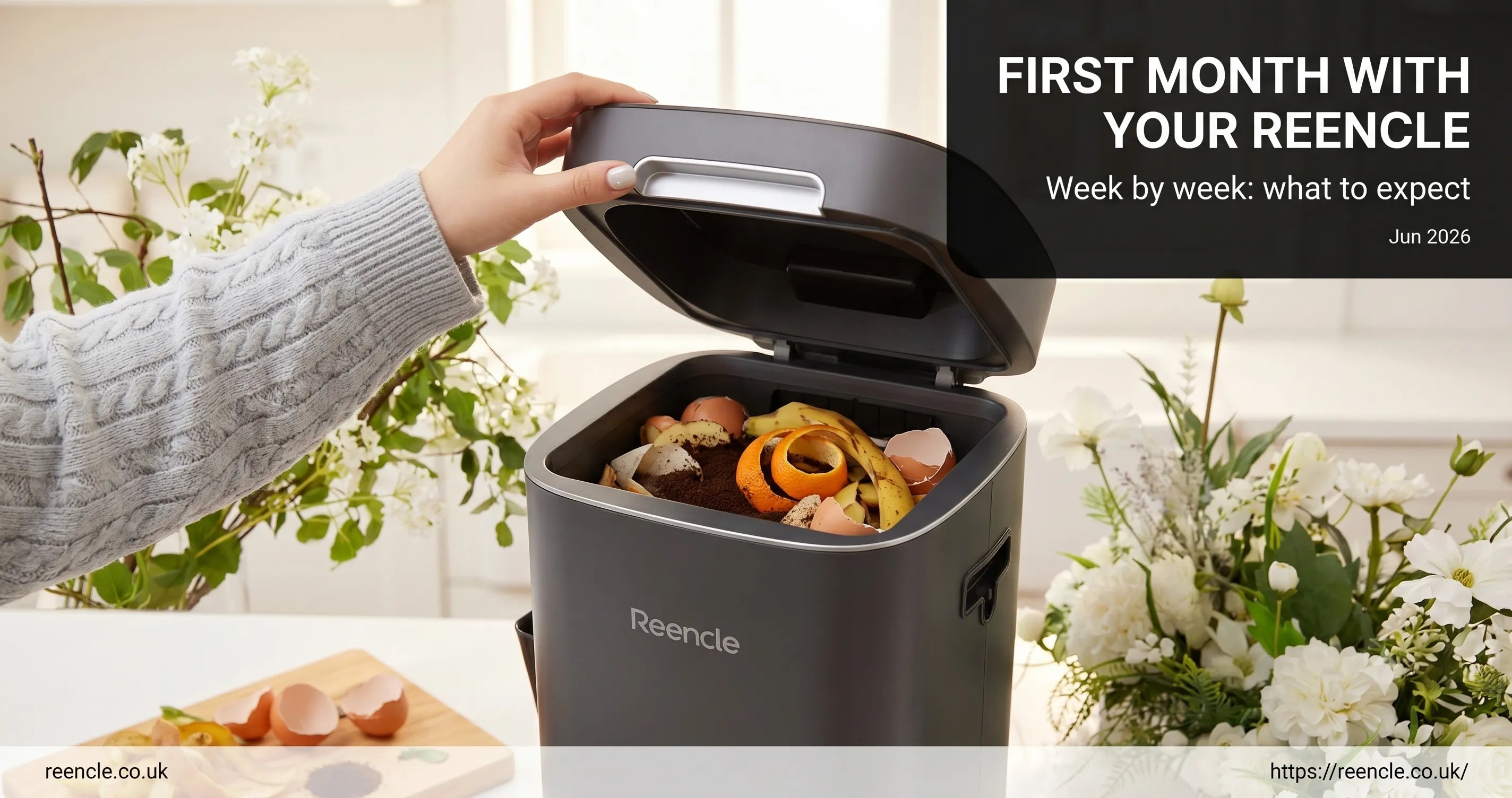
Here is how it works with an electric composter like the Reencle Prime. Your mouldy bread, wilted lettuce, leftover curry, or sour milk goes into the chamber. Bacillus microorganisms break it down continuously. The machine manages temperature, aeration, and moisture. After the initial breakdown, the material requires a curing period of 3 to 4 weeks, mixed at a ratio of roughly 5 parts soil to 1 part compost output. This final step stabilises the nutrients and ensures the compost is safe for plants.
Once cured, the compost feeds houseplants, window boxes, allotments, or community gardens. It improves soil structure, retains moisture, and provides nutrients. Your failed storage becomes a resource that grows tomatoes, herbs, or roses.
None of this refunds the £700 a year the average family wastes. But it redeems the spoilage. Instead of generating methane in landfill, your wasted food participates in a cycle of growth. The loop only truly closes when compost returns to the earth to grow something new. Until then, it is just partially digested waste sitting in a bucket.
Quick Reference
Fridge Storage Zones & Spoiled-Food Composting Guide
| Zone | Safe For | Temperature Risk | When It Spoils, Compost It? |
|---|---|---|---|
| Top shelf | Ready-to-eat foods, cooked leftovers, packaged ham | Warmest part of fridge; use within 1-2 days once opened | Yes - all cooked leftovers and mouldy ready-to-eat foods |
| Middle shelves | Dairy, eggs, sauces, soups | Moderate; keep yoghurt away from door | Yes - sour milk, mouldy cheese, old eggs |
| Bottom shelf | Raw meat, fish, poultry in sealed containers | Coldest spot; safest for high-risk items | Yes - spoiled raw meat and fish (use hot composting or electric) |
| Salad drawer | Vegetables, fruit, herbs | High humidity can accelerate rot if not ventilated | Yes - wilted lettuce, mouldy berries, soft potatoes |
| Door | Drinks, condiments, jams | Warmest and most variable; temperature swings every time door opens | Yes - mouldy jam, fermented condiments, off fruit juice |
Can We Really Afford to Keep Throwing Food Away?
£700 per year. That is not a trivial figure for the average British family. It is a long weekend in Cornwall. It is a month's groceries. It is a contribution towards a new boiler when winter bites. Yet we routinely throw this money away because storage failed, labels confused us, or life simply got in the way.
Nationally, the picture is bleaker. UK households discard 9.5 to 10.7 million tonnes of food annually (WRAP). Around 70% of that waste was avoidable (Royal Horticultural Society). When this food reaches landfill, it decomposes anaerobically and releases methane, a gas 25 to 28 times more potent than carbon dioxide (Royal Horticultural Society).
No household will ever store food flawlessly. The aim is to ensure inevitable waste never reaches landfill. Composting, whether through council collections, garden heaps, or an indoor food waste composter, is the mechanism that makes this possible. It turns a climate threat into a gardening asset. It closes the loop between the food we could not save and the soil that grows the next meal.
FAQ
Common Questions
Why does my food go off so quickly in the fridge?
Your fridge is likely too warm. The average UK fridge runs at 5.3°C, which is above the Food Standards Agency recommendation of 0-5°C. Warm fridges allow bacteria to multiply faster, and poor air circulation from overfilling creates warm pockets that spoil food prematurely.
What temperature should my fridge be?
The Food Standards Agency advises that fridges should be kept at 0-5°C, and freezers at -18°C. Use a standalone fridge thermometer placed on the middle shelf to check, as built-in dials are often inaccurate.
Is food past its use-by date safe to eat?
No. Use-by dates are safety-critical and based on scientific testing for harmful bacteria like listeria. Even if food looks and smells fine, pathogens may be present in dangerous quantities. Never eat food past its use-by date.
What's the difference between best-before and use-by?
Use-by dates relate to food safety and appear on perishables like meat and fish. Best-before dates relate to quality and appear on longer-life foods like biscuits and pasta. Food past its best-before date is usually safe to eat but may have lost texture or flavour.
Can I compost food that's already gone bad or mouldy?
Yes. Mouldy bread, wilted vegetables, and spoiled fruit are all compostable. The composting process breaks down the mould and organic matter safely. Just ensure you use a system that handles your specific waste type, especially if it includes meat or dairy.
Can you compost cooked leftovers, meat and dairy?
Yes, but not in a standard outdoor heap. Meat and dairy attract pests and smell unpleasant in open piles. Use a hot composter, bokashi bucket, or electric indoor food waste composter to process these items safely without rodents or odours.
What can I do with food waste if I don't have a garden?
You have two excellent options. First, all English councils will offer weekly food waste collections by March 2026, so use your council caddy. Second, electric indoor composters like the Reencle Prime process all food types on a kitchen worktop and require no outdoor space at all.
How do I stop wasting so much money on food that spoils?
Store your fridge at 0-5°C, learn the difference between use-by and best-before dates, keep raw meat on the bottom shelf, and rotate stock so older items get used first. Accept that some waste is inevitable, and set up a composting system so spoiled food never reaches landfill.
The bottom line
Storage will always fail eventually. The fridge is too warm, labels confuse us, and life simply gets in the way. What matters is where the spoiled food ends up.
And the scraps? Every mouldy loaf, wilted salad bag, and forgotten curry that goes into a composter instead of landfill is methane avoided and soil gained.
Explore the Reencle Composter →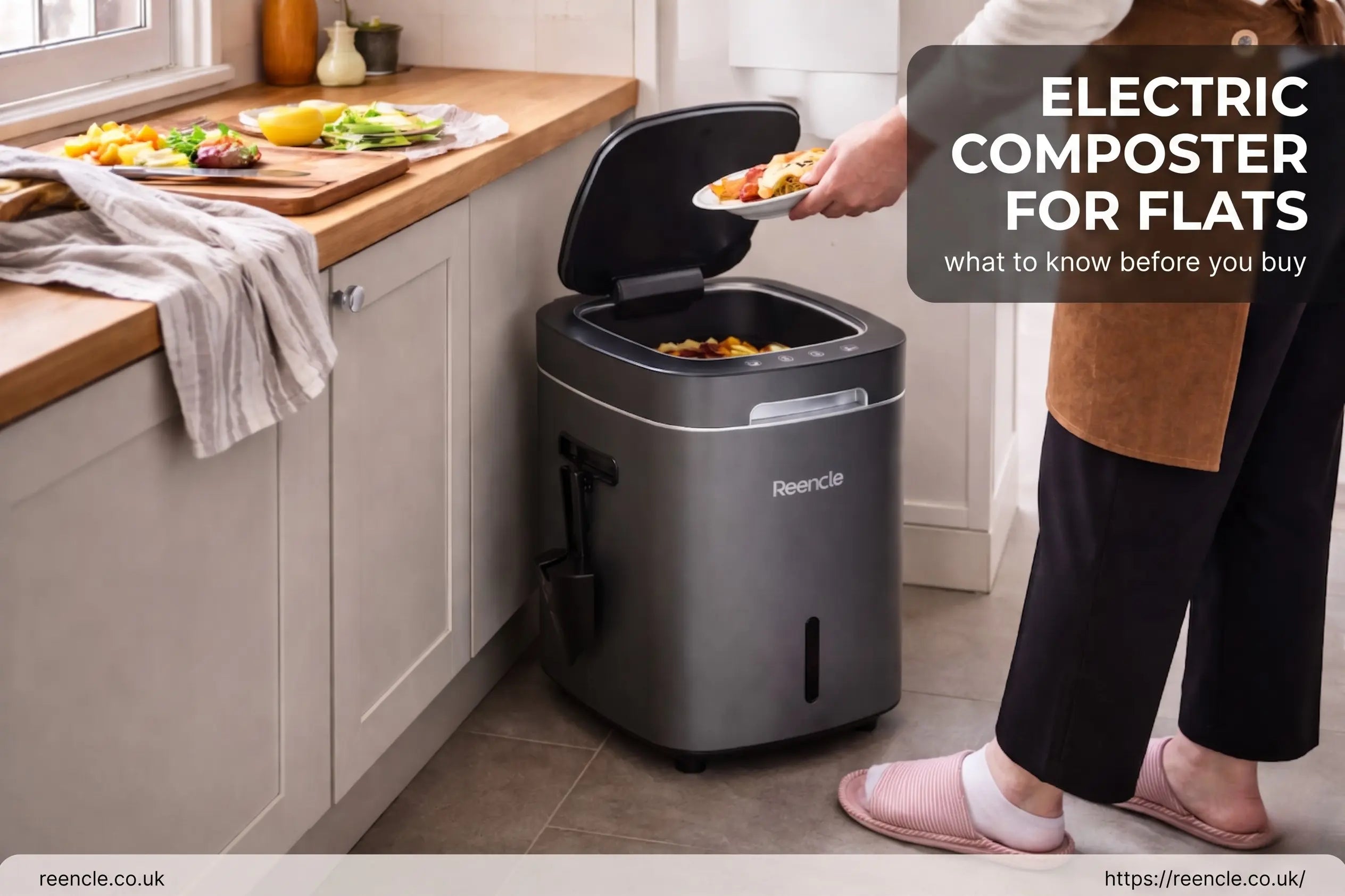

Leave a comment
This site is protected by hCaptcha and the hCaptcha Privacy Policy and Terms of Service apply.