
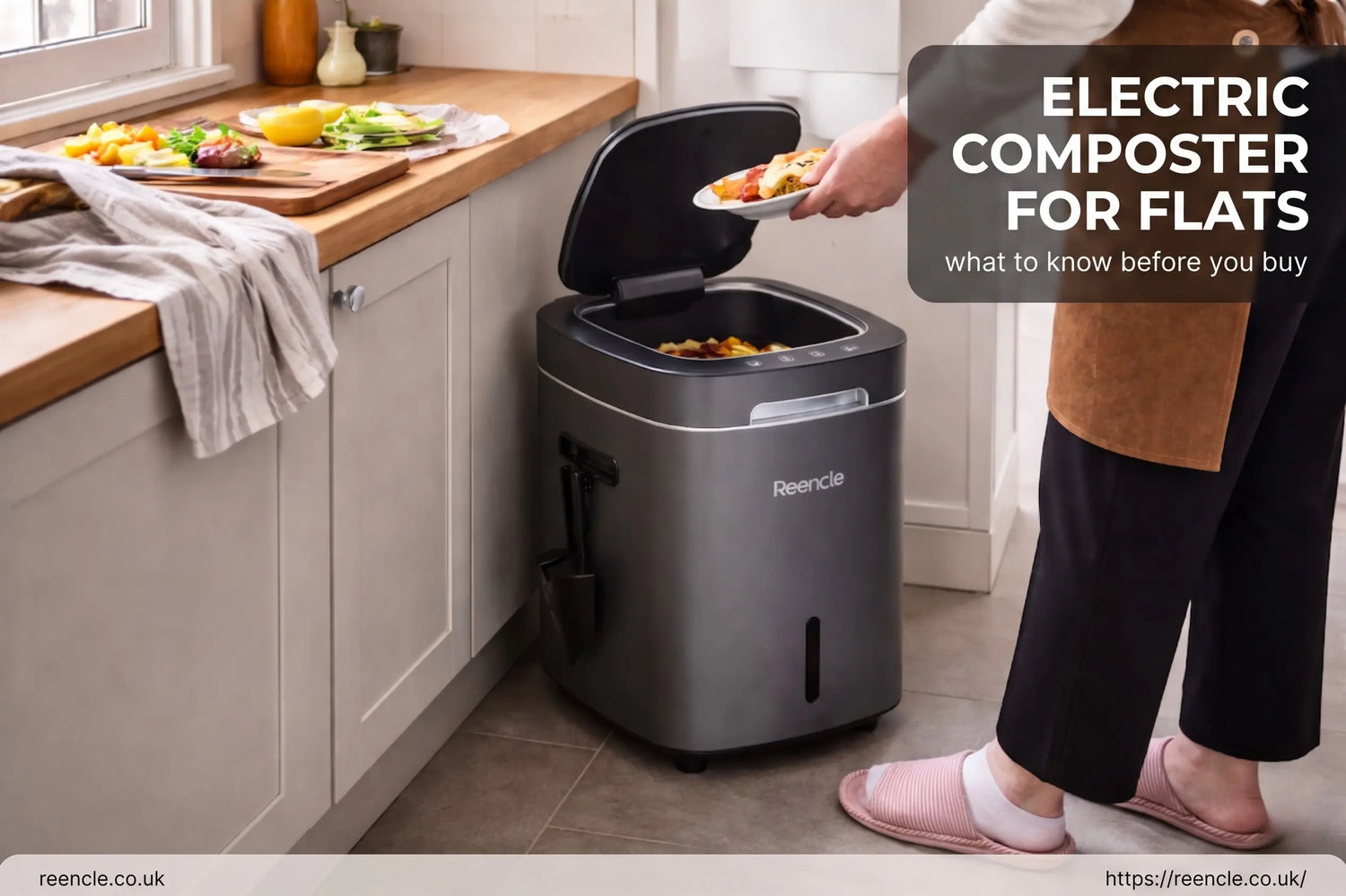
Electric Composter for Flats: What You Actually Need to Know Before You Buy
Living in a flat doesn't mean your food waste has to go straight to landfill. Here's what to look for in an electric composter, and how to make it work without a garden.

By the Reencle Team
Most guides on composting in a flat steer you toward wormeries, bokashi bins, and community schemes. Nothing wrong with any of them. But if you're after an electric composter specifically for flats, you want something that sits on your worktop, takes actual food waste, including cooked leftovers, meat, and dairy, and doesn't require a garden at the end.
The catch is that plenty of machines sold as electric composters aren't quite what they sound like. Some are dehydrators. Some are grinders. Some produce a powder that needs months of outdoor curing before it goes near a plant. Buying the wrong one is an expensive lesson.
UK households waste food worth roughly £1,000 per family of four every year, and flat-dwellers tend to get the least help from council food waste schemes. Here's how to pick the right machine and work out what to do with the output.
Contents


Quick Reference
Electric Composter vs. Alternatives for Flat-Dwellers

FAQ
Common Questions
The bottom line
The right electric composter handles your flat's food waste with no garden required and no disruption to a small kitchen.
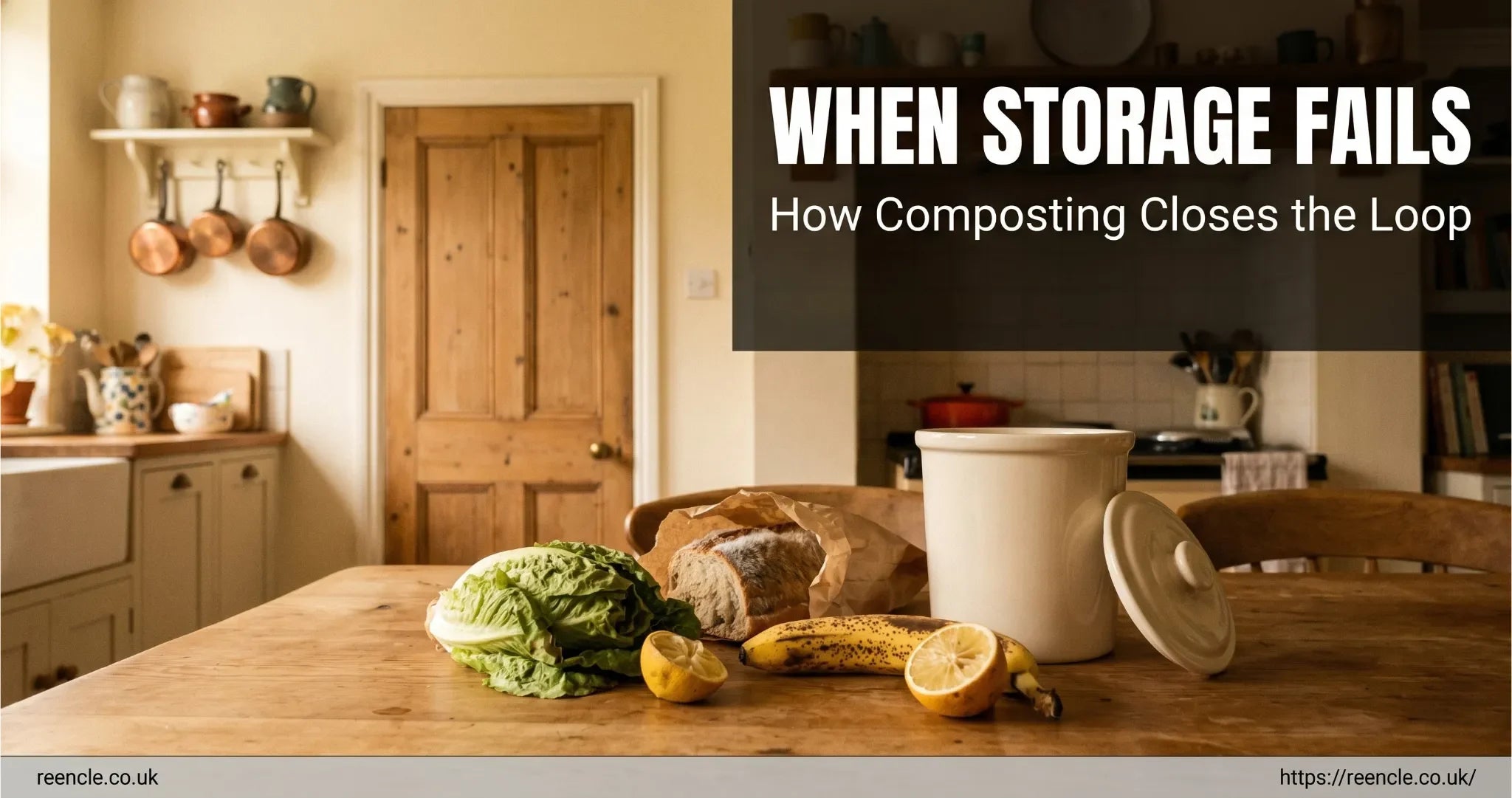
And the scraps? Every meal generates scraps: vegetable peelings, leftover rice, meat trimmings, fruit rinds, coffee grounds, fish skins. For most flat-dwellers, all of it ends up in the general waste bin and goes to landfill. A home composter like Reencle processes all of it indoors, using live microbes to break everything down into stable compost ready for a balcony planter, houseplants, or a local community garden. No garden required. No separate bin for meat and dairy.
See the Reencle Composter →

Leave a comment
This site is protected by hCaptcha and the hCaptcha Privacy Policy and Terms of Service apply.