
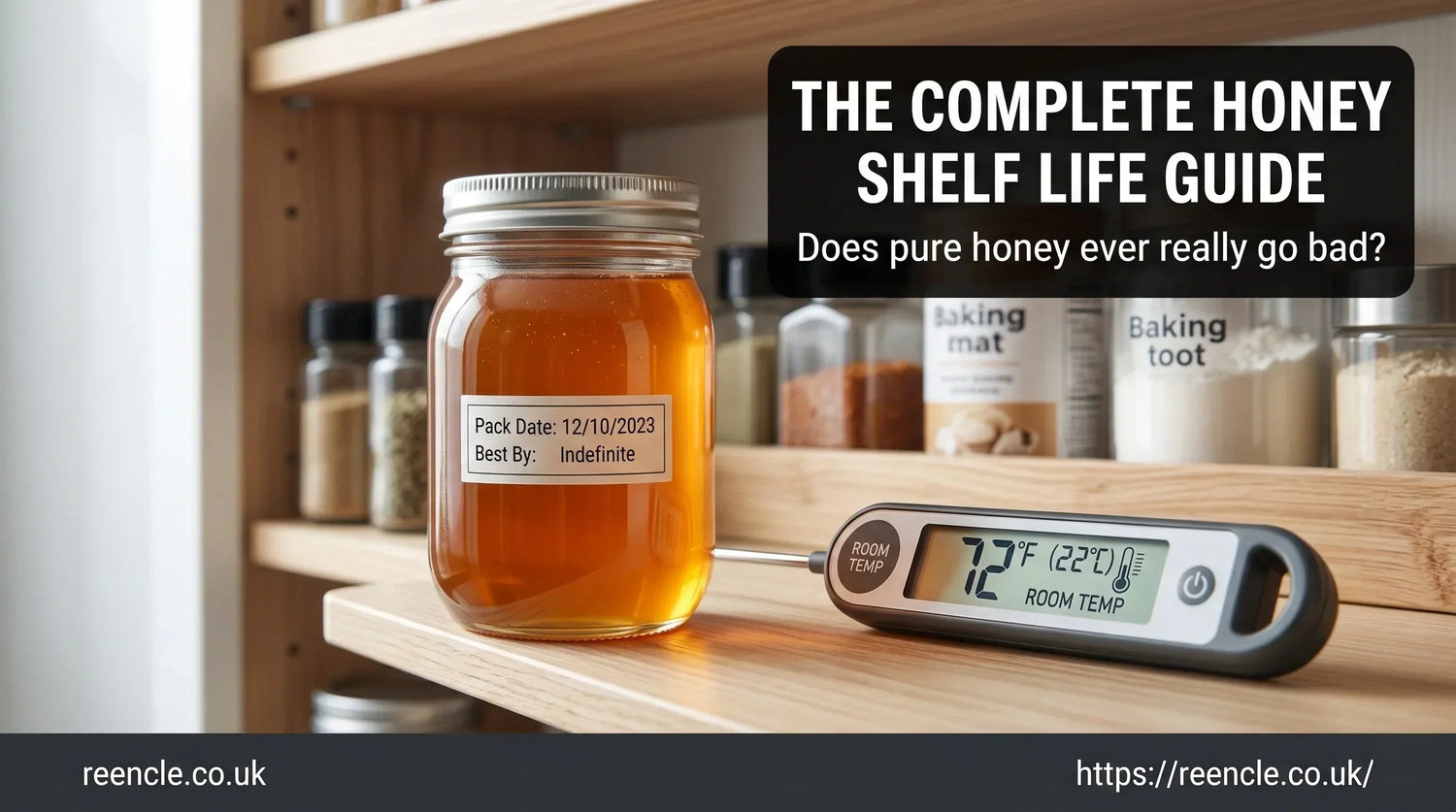
Does Honey
Ever Go Bad?
Pure honey found in Egyptian tombs was still edible after 3,000 years. Here's the science behind honey's extraordinary shelf life — and the one real threat to watch out for.
 Contents
Why Pure Honey Lasts Forever
Four overlapping properties create an environment where microbes simply cannot grow. No single one is sufficient on its own, but combined, they make honey one of the few foods that truly never spoils if stored properly.
Ultra-Low Water Activity
Most bacteria and mold need water activity above 0.91 to survive. Honey at 0.5–0.6 is a microbial desert — there simply isn't enough free water available for anything to grow.
Osmotic Killing Power
Extreme sugar concentration pulls water out of any microbial cell attempting to colonize it via osmosis. Microbes dry out and die almost immediately.
Natural Acidity
Most dangerous bacteria die in environments below pH 4.6. Honey's gluconic acid keeps it at pH 3.9 — well inside the kill zone for most pathogens.
Hydrogen Peroxide
Bees add glucose oxidase to nectar during production. When honey is diluted by moisture, this enzyme activates and produces hydrogen peroxide — a natural antimicrobial on demand.
 Section 02
Raw vs. Processed Honey
Most commercial honey is filtered and pasteurized at about 149°F. Raw honey is unfiltered, unpasteurized, and often cloudy or opaque — containing pollen, propolis, and dormant yeast cells.
Raw Honey
- Contains pollen, propolis, enzymes, antioxidants
- Richer flavor complexity
- Crystallizes faster (more nucleation sites)
- Slightly more fermentation risk if exposed to moisture
- Same shelf life when stored sealed and dry
Processed Honey
- Stays liquid longer after opening
- Clearer appearance, uniform texture
- Heat destroys heat-sensitive enzymes
- Pollen, propolis, and wax particles removed
- Same shelf life when stored sealed and dry
"For shelf life, it doesn't matter. Both types, when sealed and stored in a cool dry place, have effectively unlimited shelf lives."
Understanding Crystallization
Crystallization is when liquid honey transforms into a grainy or semi-solid state. It is not spoilage — it's a normal, reversible physical change. Crystallized honey is chemically identical to liquid honey. No nutrients or antimicrobial properties are lost.
Glucose ratio
High-glucose honeys (clover, canola) crystallize quickly. High-fructose honeys (tupelo, acacia) can stay liquid for years.
Temperature
Peak crystallization at 50–59°F. Room temperature slows it. Above 104°F, it won't crystallize at all.
Nucleation sites
Pollen, beeswax, and air bubbles give glucose crystals a place to form. Raw honey crystallizes faster for this reason.
 Section 04
When Honey Actually Spoils
The cause is almost always moisture contamination. When water content rises above 19–20%, dormant yeast activates and ferments the sugars — producing alcohol, carbon dioxide, and an unmistakably sour smell.
Common moisture entry points: a wet spoon, humid storage, frequent opening in a humid room, or contamination from water-containing foods.
Fermented honey isn't dangerous to adults — it's essentially a primitive mead. But it's genuinely unpleasant to eat. If it smells sour or shows visible bubbling, discard it.
 Section 05
Proper Honey Storage
Honey storage is simple and requires no special conditions. Just keep moisture out.
Seal it tightly
Honey is hygroscopic — it absorbs moisture from air. Always replace the lid securely after every use.
Room temperature
Keep at 65–75°F. Refrigeration accelerates crystallization and is completely unnecessary.
Avoid direct sunlight
Prolonged sun degrades enzymes and causes minor color and flavor changes. A pantry works perfectly.
Dry utensils only
Never use a wet spoon. Even small amounts of water introduced over time can initiate fermentation.
Right container
Glass jars are ideal. Food-grade plastic is acceptable. Avoid most metals — honey's acidity can react and cause off-flavors.
 Section 06
Signs of Actual Spoilage
The distinction is crucial — crystallization is not spoilage. Here's how to tell the difference:
| Sign | What it means | Action |
|---|---|---|
| Sour or alcoholic smell | Fermentation from moisture | Discard |
| Bubbling or effervescent texture | Active fermentation | Discard |
| Visible mold on surface | Moisture contamination | Discard |
| Grainy or cloudy appearance | Normal crystallization | Perfectly safe |
| Darker color over time | Minor heat/oxidation | Generally safe |
Expert Insight
Beekeepers know something most people don't: honey's longevity is physics, not luck. The FSA confirms honey lasts indefinitely, and that's true — but only for pure honey stored dry. The moment you introduce moisture, you've changed the chemistry. What separates honey that lasts a decade from honey that ferments in six months is usually just one thing: how carefully you prevent moisture from entering the jar. One wet spoon ruins months of storage.
Frequently Asked Questions
The Bottom Line
Pure honey stored properly lasts indefinitely. Crystallization is not spoilage — it's normal, reversible, and often preferred. The only genuine threat is moisture contamination leading to fermentation.
Store honey sealed at room temperature, use clean, dry utensils, and you'll never need to throw it out. For the scraps and waste that do accumulate in your kitchen, see our guide to reducing food waste at home.
Check your honey storage today
If your jar is open or stored in a humid location, seal it and move it to a pantry or cupboard. One wet spoon can ruin months of storage.
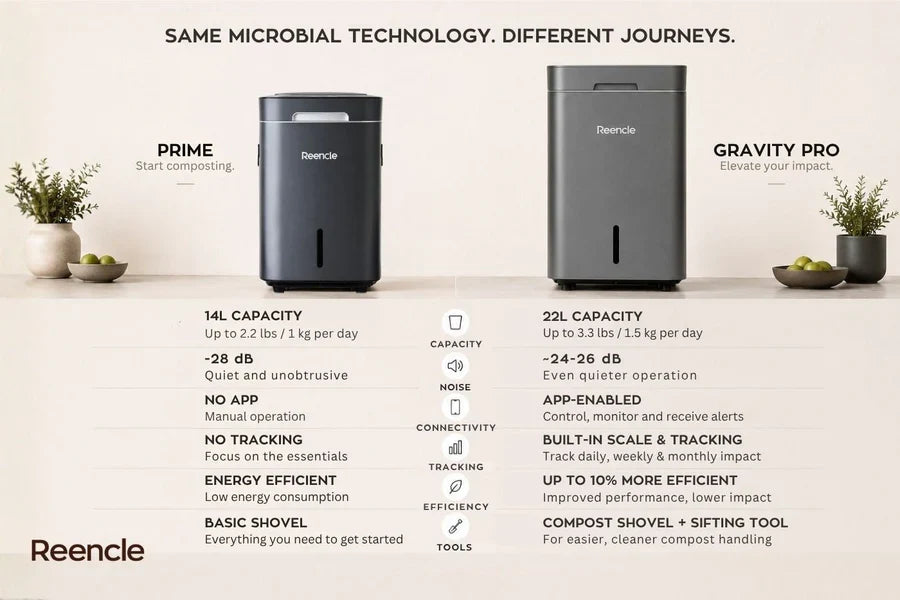
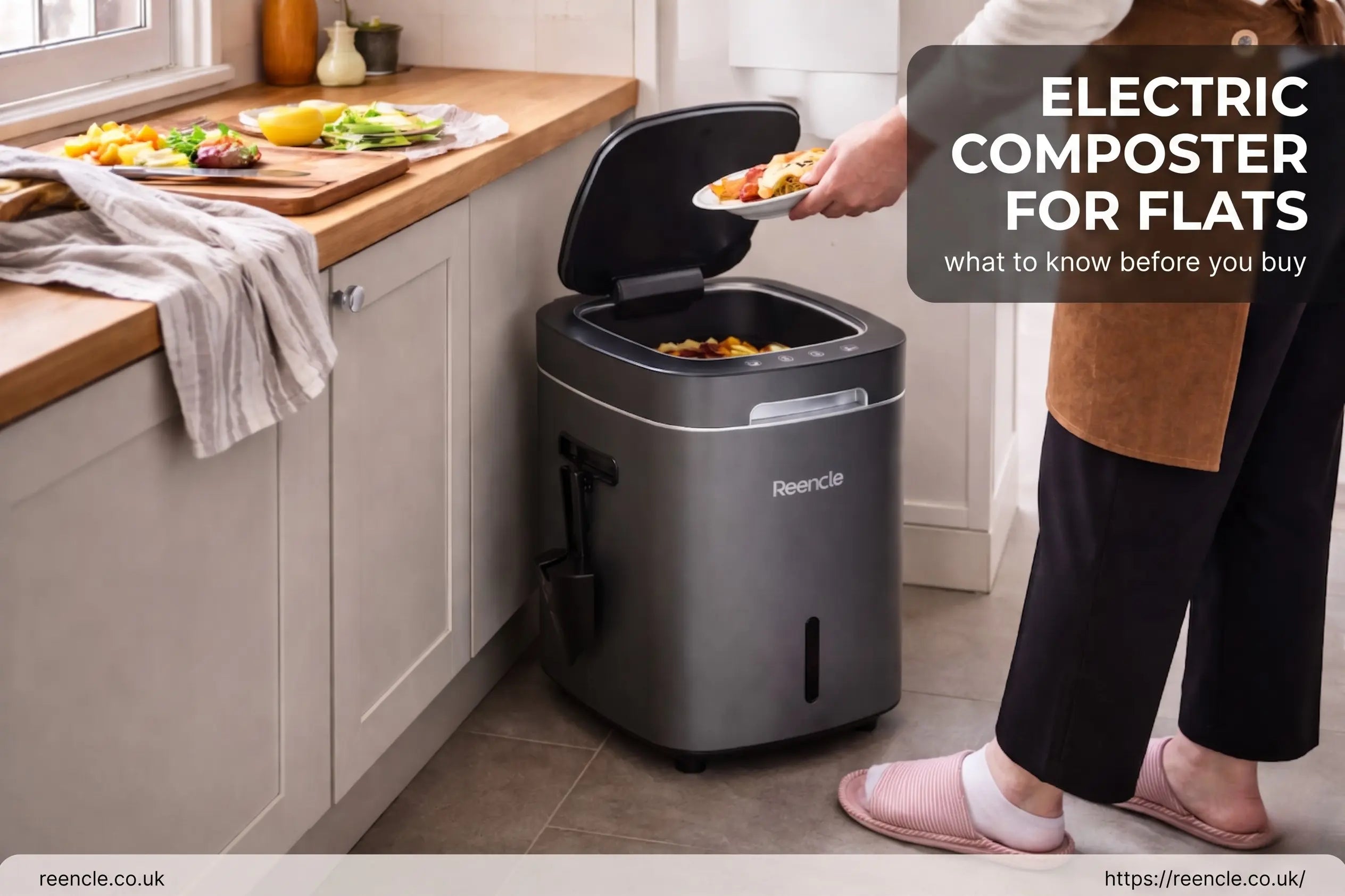
Even with perfect storage habits, some food waste is unavoidable — expired jars, sticky residue, crystallized scraps that didn't get rescued in time. Instead of sending those to landfill, a home composter converts kitchen waste into nutrient-rich compost in as little as 24 hours. It's the natural next step after getting your storage right.
Learn more about food storage

Leave a comment
This site is protected by hCaptcha and the hCaptcha Privacy Policy and Terms of Service apply.