
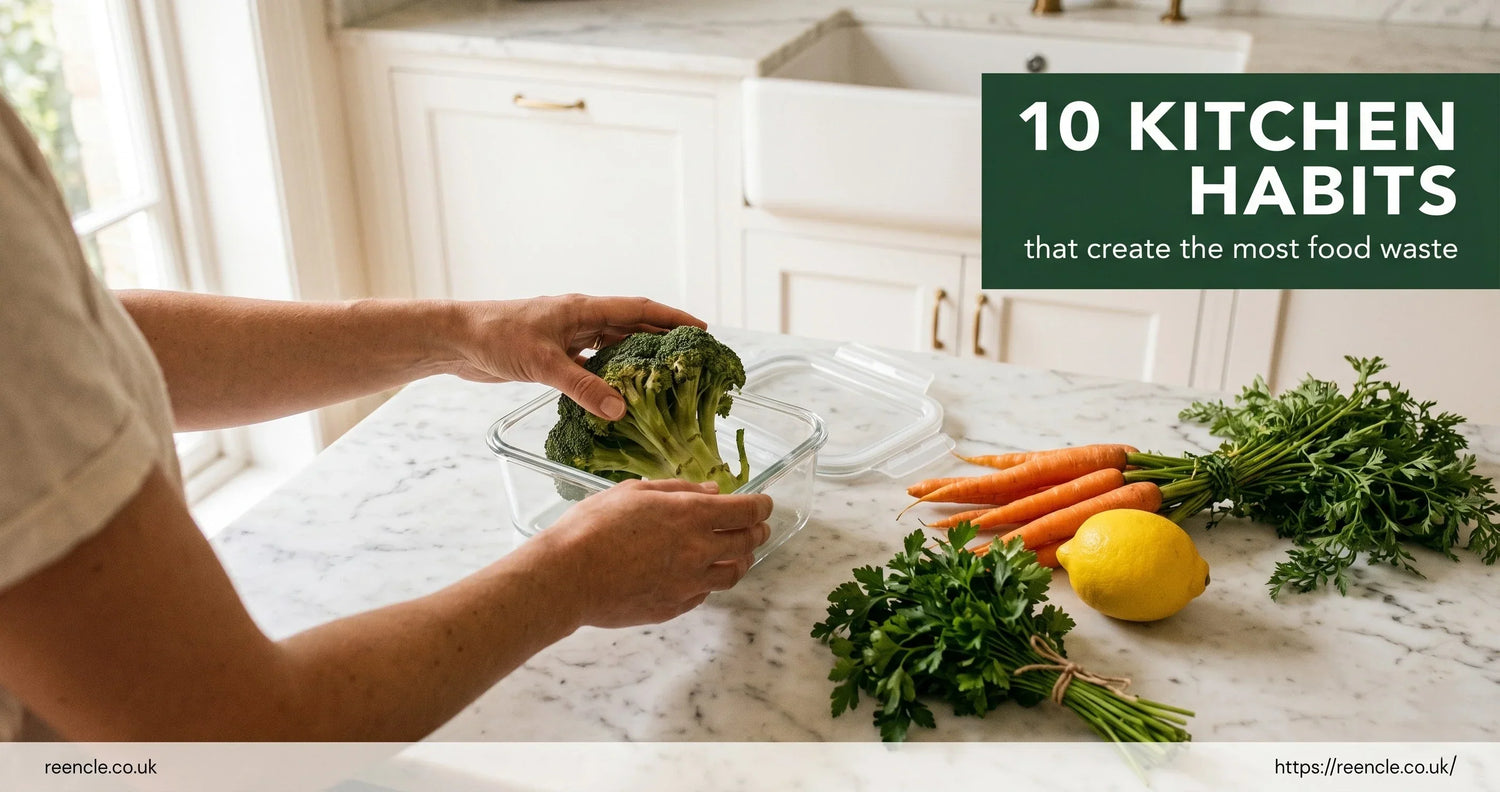
10 Everyday Kitchen Habits That Create the Most Food Waste – and How to Break Them
Most household food waste isn't caused by carelessness. It's caused by habits so routine you barely notice them. Here's how to spot them and what to do differently.
By the Reencle Team · 8 January 2026
UK households throw away around 4.5 million tonnes of edible food every year, worth roughly £14 billion. That's somewhere between £470 and £700 per household, depending on family size. Most of it doesn't come from restaurants or manufacturers. It comes from our own kitchens, quietly. One forgotten yoghurt or over-peeled carrot at a time.
The habits driving this waste are fixable. None of them require a lifestyle overhaul. A little awareness and a few small changes applied consistently can make a real difference.
Contents
Overbuying Fresh Produce
Fresh fruit and vegetables are the UK's most wasted food group. According to WRAP, 510,000 tonnes of potatoes alone are thrown away every year. That's roughly 2.9 million whole potatoes binned every single day. The problem is almost always the same: buying more than you can realistically get through before things spoil.
Shopping while hungry makes it worse. So does shopping without a list, or picking up extras "just in case." By the time you remember that bag of spinach, it's gone.
Before you shop, check what you already have. Plan meals for the week and build your list from that. Buy loose fruit and vegetables where possible; it lets you take what you actually need rather than the nearest pre-bagged amount. If you tend to buy a bunch of herbs and use a small handful, dried alternatives work fine for most cooked recipes.
Confusing "Use By" with "Best Before"
WRAP consistently identifies date label confusion as a major driver of unnecessary food waste. Many people treat both labels as hard cutoffs and bin food that's still perfectly safe to eat.
They're not the same thing.
- "Use by" is a safety date. The Food Standards Agency is unambiguous: do not eat food past its use-by date, even if it looks and smells fine. You can't always detect the bacteria that cause food poisoning by sight or smell. Use-by dates appear on perishable items: meat, fish, and ready-to-eat meals.
- "Best before" is about quality, not safety. It tells you when the manufacturer expects the food to be at its peak. After that date, it may have lost a little texture, flavour, or appearance, but it's generally still fine to eat. Bread, dried pasta, tinned goods, frozen food, and most fresh produce carry best-before dates. Use your senses: look at it, smell it, taste a small amount if unsure.
- "Display until" / "sell by" are stock management tools for retailers. They have no relevance to the consumer. You can ignore them entirely.
Storing Food Incorrectly
Poor storage is one of the fastest ways to shorten food life, and one of the easiest problems to sort out. The most common issues:
- Fridge too warm. Only around half of UK households know a fridge should sit between 0°C and 5°C. The average UK fridge runs at 7°C, which is warm enough to speed up bacterial growth noticeably. Dropping it to 3–4°C can add up to three days to the life of many foods.
- Wrong zones. Most fridges are coldest at the bottom and warmest in the door. Raw meat belongs on the bottom shelf to prevent drip contamination. Dairy, eggs, and cooked leftovers go on the middle and upper shelves. The door suits condiments and drinks, not milk, despite what the moulded shelf implies.
- Opened packaging left as-is. Once you open a bag of salad or a packet of cheese, oxygen and moisture get to work immediately. Transfer to an airtight container or reseal the packet properly.
- Potatoes in the cupboard. The FSA updated its guidance in 2023: potatoes should now be stored in the fridge, below 8°C. The change helps them last longer and reduces acrylamide formation when cooked.
- Bananas near other fruit. Bananas release ethylene as they ripen, which speeds up spoilage in nearby produce. Keep them separate, or hang them away from the fruit bowl.
Cooking Too Much Without a Plan for Leftovers
Cooking too much isn't a problem in itself, as long as the extra actually gets eaten. The problem is putting leftovers in the fridge without any clear idea of when or how they'll be used, then finding them days later past their best.
Portion estimation takes practice. Some useful reference points: 75–100g of uncooked pasta or rice per person, 120–150g of uncooked meat per portion, one medium potato as a side. A kitchen scale removes the guesswork entirely.
If you cook in batches, build the second meal into your plan before you start. Leftover roast chicken becomes a sandwich, a curry, or a pasta sauce the next day. Roasted vegetables work in a frittata or a grain bowl.
For anything you genuinely don't have a plan for, freeze it the same day. Most cooked meals freeze well. Label the container with what's in it and the date. Unlabelled boxes tend to sit in the freezer for months.
Forgetting What's in the Fridge
The back of a full fridge is where food goes to die. Things get pushed behind newer purchases, dates slip past unnoticed, and by the time you find them, they're past saving.
One fix: a "use first" zone. Pick one shelf or one clear container in your fridge as the priority spot. Anything nearing its date goes there. You see it the moment you open the door.
FIFO (First In, First Out) is equally useful. When you unpack shopping, move older items to the front before the new ones go in. It takes a minute and stops the slow build-up of forgotten food at the back.
A quick fridge check once or twice a week also helps. Scan what's there before you shop next. It shapes your meal decisions and catches things before they're lost.
Peeling and Trimming Too Much
A lot of edible food is lost before it ever reaches the pan. Thick potato peels, broccoli stems chucked in the bin, carrot tops discarded, the outer leaves of leeks stripped off and thrown away.
Root-to-stem cooking means using the whole vegetable, not just the parts you're used to. It cuts waste and often produces more interesting food.
- Broccoli stems: peel the tougher outer layer and slice into stir-fries or soups, or roast alongside the florets.
- Carrot and parsnip peels: toss with oil, salt, and paprika, then bake at 200°C for 12–15 minutes for crisp vegetable chips.
- Leek tops (the dark green parts): too fibrous to eat as a vegetable, but good in stock.
- Cauliflower leaves: roast or braise them. More flavour than you'd expect.
- Herb stems: parsley and coriander stems are fully edible, chopped into sauces or stocks. Thyme and rosemary stems are woody but work well for flavouring soups and stews.
Vegetable stock is the easiest catch-all. Keep a bag in the freezer and add peelings, onion skins, celery leaves, and leek tops as you cook. When the bag is full, simmer with water and seasoning for an hour.
Tossing "Ugly" or Wilted Food
Years of supermarket shopping have trained many of us to expect produce that looks a specific way: firm, bright, perfect. Anything that doesn't clear that bar gets binned, even when it's nutritionally no different from what passed.
Slightly soft tomatoes, wilted spinach, wrinkled peppers, spotted bananas. None of these are signs of spoilage. They're signs that the food is past its visual peak and needs to be used soon.
- Wilted greens (spinach, kale, chard) can be revived in cold water and work well in soups, pasta sauces, or curries where texture matters less.
- Overripe bananas are better for baking than fresh ones: sweeter, softer, ideal for banana bread or muffins.
- Soft fruit (strawberries, peaches, plums) is perfect for compotes, smoothies, or crumble toppings.
- Slightly soft root vegetables roast perfectly well.
Genuine spoilage has tells: visible mould, an off smell, a texture that's clearly wrong. Surface appearance on its own isn't one of them.
Serving Family-Style Without Portion Awareness
Communal eating, dishes in the middle of the table, everyone helping themselves, is a nice way to eat. It also makes it easy to put out more food than gets eaten. Uneaten food from shared platters is harder to save than food that stayed in the kitchen.
The fix isn't to stop eating that way. It's to put out a bit less to start with and let people go back for more. A smaller first round takes away the pressure to fill the plate, and anything that stays in the serving dish or pan is straightforward to store.
Children's portions especially benefit from this approach. Small children's appetites vary a lot. A small portion finished is better than a large one left.
Plate waste is the hardest kind to rescue. Once food is on a plate and then off it again, your options are limited. Getting the portion right before it reaches the plate is much simpler.
Not Composting Food Scraps
Even a well-run kitchen produces scraps. Vegetable peelings, eggshells, fruit tops, tea bags, coffee grounds, the end of a bread loaf. These are unavoidable. For most UK households, all of it goes in the general waste bin and on to landfill.
In a landfill, organic matter breaks down without oxygen and releases methane, a greenhouse gas far more potent than CO₂ over a 20-year period. Composting sends that waste somewhere more useful.
- Council food waste collection: Most UK local authorities now collect food waste separately. If yours does, use it. Lowest effort, no equipment needed.
- Garden compost heap or bin: Good for uncooked fruit and vegetable scraps, eggshells, tea bags, and garden waste. Not suitable for cooked food, meat, fish, or dairy.
- Electric home composters (such as Reencle): Handle a much wider range than a garden heap, including cooked food, meat, and dairy. Produce dry, usable compost that goes straight into soil or pots. Worth considering if your household produces mixed food waste and you want to deal with it at home.
Treating the Bin as a First Resort
The last habit isn't really a specific behaviour. It's the underlying pattern behind all the others: reaching for the bin without stopping to think. A half-used tin of coconut milk. Leftover pasta from a couple of days ago. A bunch of herbs are starting to droop.
Before anything gets binned, it's worth asking: can it be used now, frozen, or composted? Leftover coconut milk freezes in an ice cube tray. Drooping herbs can be chopped and frozen flat in a food bag. Pasta keeps safely in the fridge for two days and freezes well.
The change isn't really about knowing more. It's about building a brief pause before the bin lid goes up. That pause, applied consistently, adds up.
Quick Reference
Food Waste Habit Quick Reference
| Habit | The Real Problem | Quick Fix |
|---|---|---|
| Overbuying fresh produce | No meal plan before shopping | Write a list; buy loose |
| Confusing date labels | Treating best-before as use-by | Use-by = safety; best-before = quality |
| Poor food storage | Fridge too warm, wrong zones | 3–4°C; airtight containers |
| Cooking too much | No plan for leftovers | Plan the second meal; freeze same day |
| Forgetting fridge contents | No visibility system | "Use first" zone; FIFO |
| Excess peeling and trimming | Discarding edible parts | Root-to-stem; stock bag in freezer |
| Binning imperfect produce | Cosmetic expectations | Wilted = cook it; overripe = bake/blend |
| Over-serving family-style | Too much food on the table | Serve small; offer seconds |
| Scraps to landfill | No composting system | Council collection or home composter |
| Reflexive binning | No pause before disposing | Use it, freeze it, or compost it |
The Real Cost of Kitchen Waste in UK Homes
WRAP estimates that UK households throw away around 4.5 million tonnes of edible food every year. That's roughly 70% of all food waste generated in the UK. Not from factories or supermarkets, but from homes.
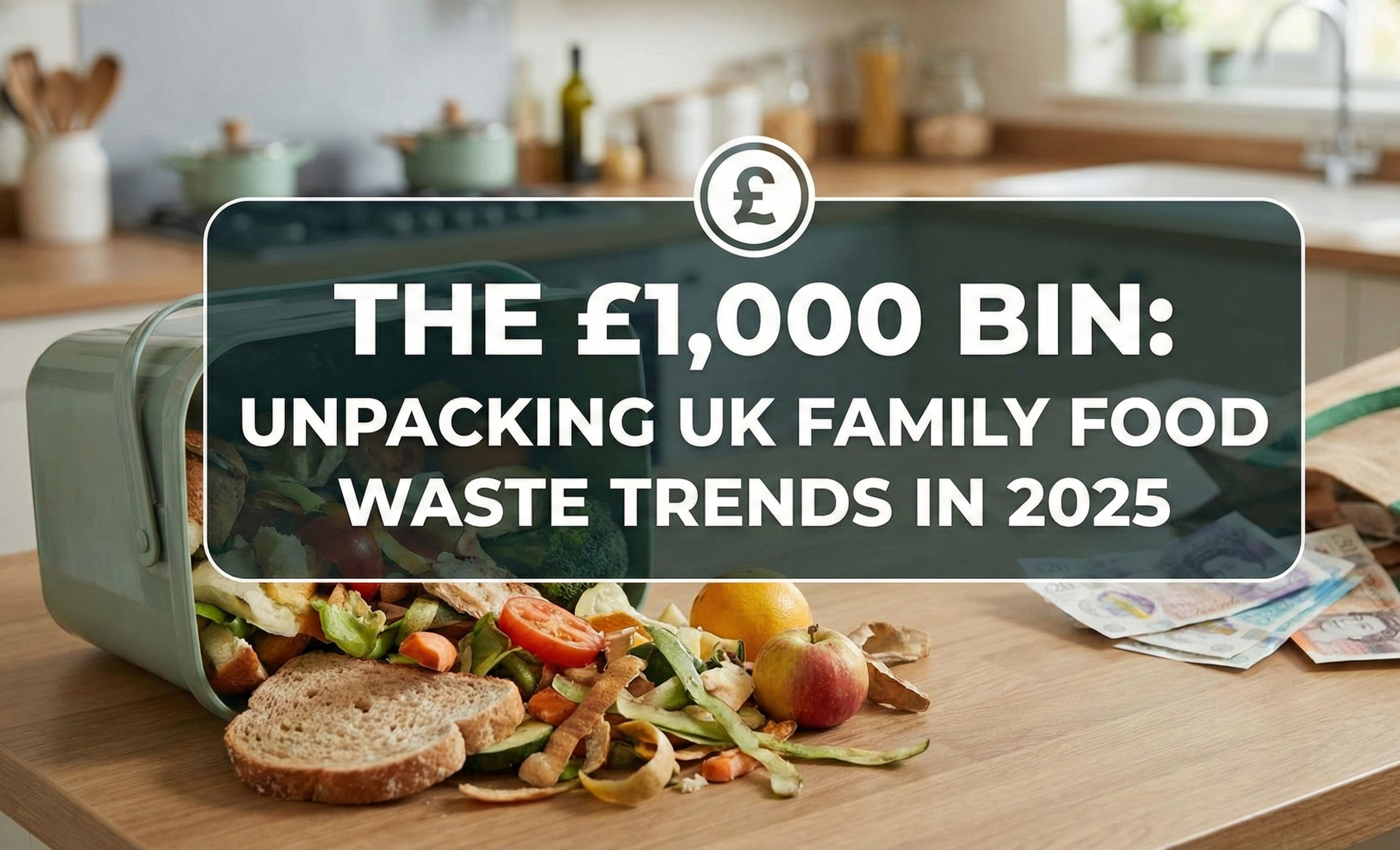
In cash terms, that comes to an average of £470 per household per year, rising to around £1,000 for a family of four. The environmental cost runs to around 18 million tonnes of greenhouse gas emissions annually.
The figure that perhaps matters most: 73% of food thrown away by UK households was edible at the time it was discarded. Not gone off. Not past a safety date. Just bought, poorly stored, or forgotten. Which means the largest lever for reducing UK food waste isn't legislation or retail policy. It's what happens in our kitchens, every day.
FAQ
Common Questions
What are the most common causes of food waste in UK homes?
The most common causes are overbuying fresh produce, poor food storage, confusion about date labels, and cooking too much without a plan for leftovers. Research from WRAP consistently identifies fresh fruit, vegetables, bread, and dairy as the food groups wasted most often in UK households.
What is the difference between "use by" and "best before" dates?
Use-by dates are food safety deadlines. The Food Standards Agency advises not eating food past this date even if it looks and smells fine. Best-before dates are quality indicators: food may be past its best but is generally still safe to eat, and you can judge using your senses. Binning food based on best-before dates alone is a significant source of avoidable waste.
How should I organise my fridge to reduce food waste?
Set your fridge to between 0°C and 5°C (around 3–4°C is ideal). Keep raw meat on the bottom shelf to prevent drip contamination. Store older items at the front so they get used first. Create a visible "use first" section for anything nearing its date. Decant opened packets into airtight containers.
Can I freeze leftovers to prevent food waste?
Yes, and it's one of the most effective food waste tools available. Most cooked meals freeze well. The key is to freeze on the day, not after two or three days in the fridge, and to label containers with the contents and the date. Cooked pasta, rice, soups, stews, and most sauces all freeze reliably.
What is root-to-stem cooking?
Root-to-stem cooking means using the whole vegetable, including parts typically discarded in preparation: skins, stems, leaves, and cores. Broccoli stems can be sliced into stir-fries, carrot peelings can be roasted into crisps, and leek tops and onion skins work well in homemade stock. It reduces preparation waste and often produces more interesting food.
How much food waste does the average UK household produce?
UK households throw away around 4.5 million tonnes of edible food each year. For an average household, this equates to roughly £470 worth of food per year, rising to around £1,000 for a family of four.
The bottom line
Small, consistent changes to how you shop, store, cook, and serve food can significantly cut what your household throws away, and save a real amount of money while you're at it.
And the scraps? Even when you shop carefully, store correctly, and use up every leftover, some waste is unavoidable. Vegetable peelings, eggshells, tea bags, coffee grounds, fruit tops, the heel of a loaf. Most UK households send all of that to landfill, where it breaks down into methane. A home composter like Reencle closes that loop at home, processing cooked food, meat, and dairy alongside everyday scraps and turning them into clean, usable compost within 24 hours.
Explore the Reencle Composter →

Leave a comment
This site is protected by hCaptcha and the hCaptcha Privacy Policy and Terms of Service apply.