
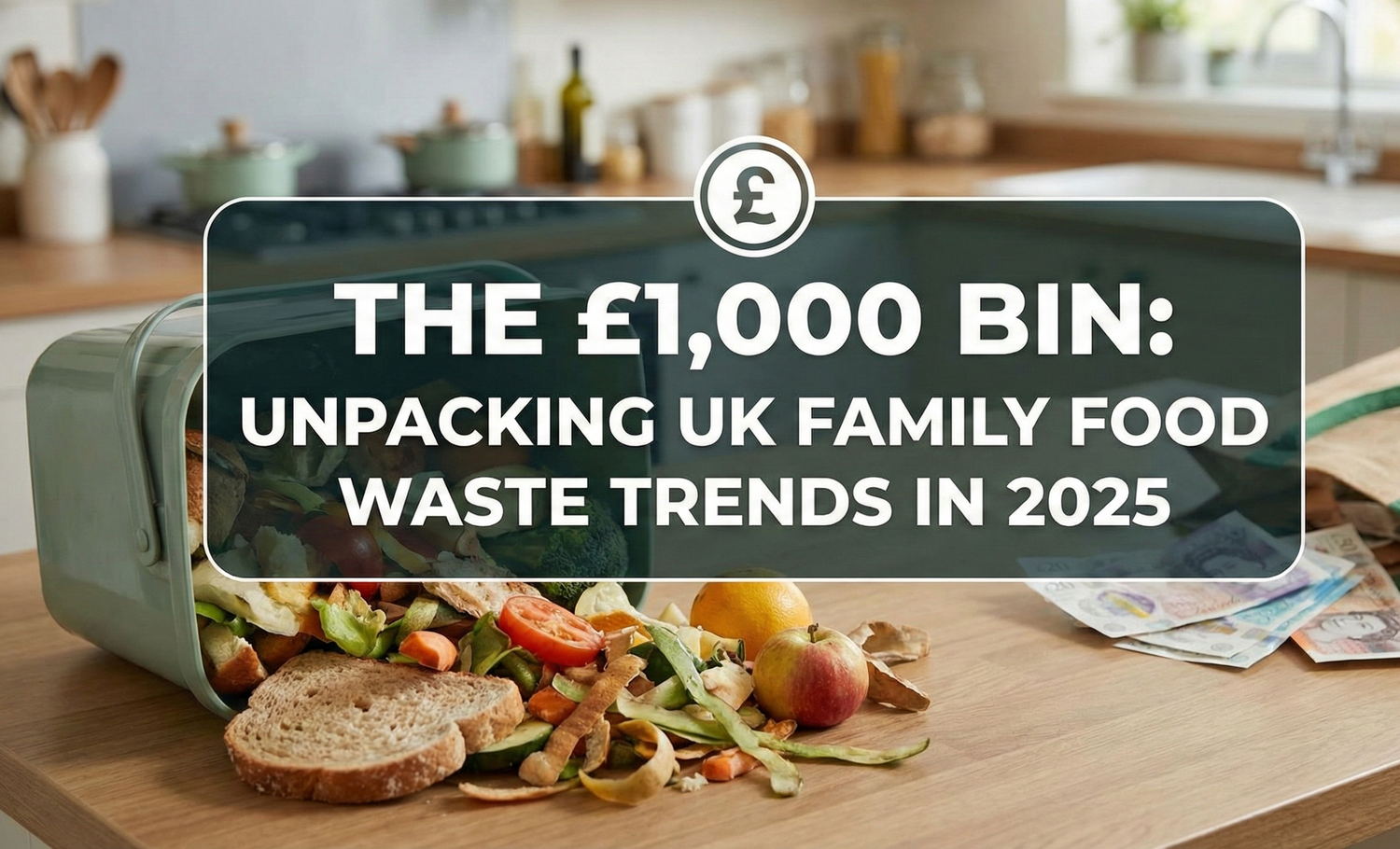
The £1,000 Bin: Unpacking UK Family Food Waste Trends in 2025
We all do it. The bagged salad that turned to sludge in the crisper drawer. The last few slices of bread that went mouldy before toast time. The potatoes that started sprouting eyes while waiting for a Sunday roast that never happened.
It feels like a minor annoyance in the moment. A quick guilt trip as we toss it in the general waste bin. But when you aggregate those moments across the UK, the picture changes dramatically.
Reencle has analysed the latest 2024/2025 data to bring you the reality of the UK’s kitchen habits. The bottom line? Our bins are eating better than we are, and it’s costing us a fortune.

The Hard Numbers: A Weighty Issue for UK Households
Following a brief dip in waste during the height of the pandemic and the initial cost-of-living spike, current statistics indicate that household food waste is sadly on the rise again.
The data paints a stark picture of the average UK family of four:
- Weekly Weight: We are throwing away approximately 5.6 kg of food every single week. That’s roughly the weight of a standard bowling ball ending up in the landfill weekly.
- The Financial Hit: This isn't just environmental; it's economic. This waste costs the average family between £19 and £20 per week.
- The Annual Cost: That weekly loss compounds to a staggering £800 to £1,000 per year. Imagine withdrawing £1,000 in cash on January 1st and immediately putting it through a shredder.
Crucially, research suggests 70% of this waste is "avoidable." We aren’t just talking about eggshells and chicken bones; we are talking about food that was perfectly good to eat.
2025 Trends: The "Displaced Meal" and The "Good Provider"
Why are these numbers rising when we are all more conscious of our budgets? The latest research points to complex behavioral shifts.
1. The "Displaced Meal" Phenomenon
This is perhaps the most relatable trend of 2025. You plan a healthy meal for Wednesday night. You buy fresh ingredients on Saturday. By Wednesday, work ran late, the kids are cranky, and the energy to cook is gone. You order a takeaway.
The intention was good, but life got in the way. That fresh meal - the chicken, the vegetables -sits in the fridge until it expires. The meal wasn't cancelled; it was just displaced by convenience, resulting in waste.
2. The "Good Provider" Syndrome
Experts have identified a psychological barrier, particularly among parents. We overbuy healthy foods—fruits, salads, vegetables—because buying them makes us feel like we are providing well for our families.
When that healthy food rots, we feel guilty. Yet, we repeat the cycle the next week because buying less healthy food feels like neglecting our family's nutritional needs. It’s a difficult cycle to break.
3. The Usual Suspects
The top wasted items haven’t changed much, but the volume has. Bread (20 million slices daily across the UK), milk, potatoes, and bagged salad remain the most frequent victims of the bin.
Moving Beyond Guilt: A Smarter Way to Manage Waste
We need to stop treating food waste merely as a moral failing and start treating it as a logistical reality of modern life.
Yes, we should strive to meal plan better and use apps like Kitche or Olio to track inventory and share surplus. These are fantastic tools. But life is messy. Even the most organised family will end up with inedible potato peelings, coffee grounds, and the occasional forgotten zucchini.
The goal isn't necessarily "zero waste" (which can feel unattainable); the goal is "zero landfill."
The Reencle Perspective: Closing the Loop at Home
This is where the conversation shifts from guilt to empowerment. If we accept that some organic waste is inevitable in a busy home, the question becomes: How do we manage it responsibly without adding more chores to our list?
Traditional composting is wonderful, but it requires outdoor space, time, effort, and often involves dealing with unpleasant odors and pests. It is not a viable solution for every modern family.
Enter the Reencle Home Composter.
We designed Reencle to be the realistic safety net for the modern UK kitchen. It addresses the psychological and practical barriers to reducing food waste:
- It handles the "ick": You don't need to let food rot in a caddy waiting for bin day. You add waste to Reencle as you create it.
- It manages the "unavoidable": Even if you eat every scrap of edible food, you still have cores, peels, and crusts. Reencle transforms these leftovers into nutrient-rich compost in as little as 24 hours.
- It breaks the landfill cycle: By processing waste right in your kitchen, you stop contributing to the methane emissions caused by food rotting in landfills.
Reencle turns a source of guilt (the full bin) into a resource for your garden or houseplants. It’s about taking responsibility for our consumption in the most convenient way possible.

Stop Throwing Money Away. Start Cultivating Change.
The statistics are clear: the status quo is expensive for our wallets and devastating for the planet. We cannot afford another year of throwing £1,000 into the bin.
It’s time to modernise how we handle the inevitable byproducts of feeding our families.
Are you ready to close the loop in your kitchen and stop feeding the landfill?

Leave a comment
This site is protected by hCaptcha and the hCaptcha Privacy Policy and Terms of Service apply.