

Contents
Use Airtight Containers
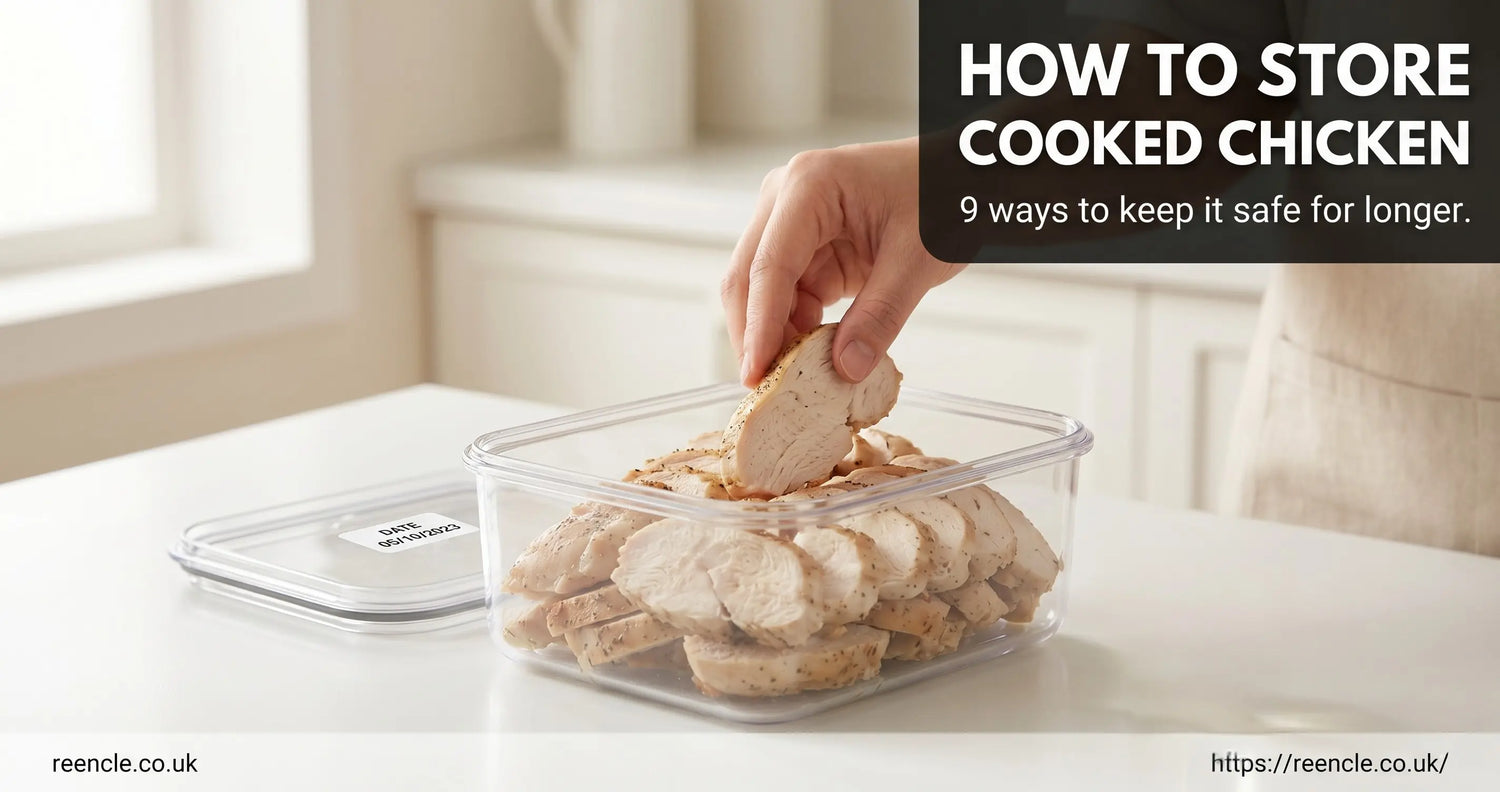
The single best thing you can do is transfer cooked chicken to an airtight container immediately after it cools. Glass containers with snap-on lids work best, though high-quality plastic containers seal just as effectively.
Why this matters: Bacteria grow on exposed surfaces. An airtight container creates a barrier that slows surface oxidation and bacterial colonization. It also prevents your chicken from absorbing odours from other foods in the fridge. The seal traps moisture too, which keeps the chicken from drying out over the 3–4 day window.
Cool Before Storing
Let cooked chicken cool to room temperature before putting it in the fridge, but don't leave it sitting out for more than 2 hours. The USDA's danger zone rule is firm: bacteria double every 20 minutes between 40°F and 140°F.
Cook the chicken, set it on a clean plate, and let it sit at room temperature for 15–30 minutes until no longer steaming. Then transfer to an airtight container and refrigerate immediately.
Store on the Coldest Shelf

The coldest part of most refrigerators is the back of the bottom shelf. That's where temperature stays most stable — usually 35–38°F if your fridge is set to 40°F overall.
Avoid the door shelves entirely. They're the warmest zone in the fridge due to air exposure every time the door opens. Storing cooked chicken there can cut its safe lifespan by 1–2 days.
Keep Above Raw Meat
Store cooked chicken on a shelf above any raw meat. If raw chicken or ground beef drips, it won't contaminate your already-cooked food. Food safety hierarchy is simple: cooked goes above raw, always.
A few drops of raw poultry juices contain Salmonella and Campylobacter. Once they hit your cooked chicken, heating won't save it — heat kills bacteria, not heat-stable toxins.
Label Everything With a Date
Write the date on your container with a permanent marker, or use a sticky label. This is non-negotiable.
Listeria monocytogenes multiplies at refrigerator temperatures without producing any odour or visible change until the bacterial load is already dangerous. You can't rely on your senses. Time is the most honest food safety indicator you have.
Place in Shallow Containers
Avoid stacking cooked chicken in a deep container. Shallow containers (no more than 2 inches deep) allow heat to escape faster during the cooling phase and let cold air circulate evenly around all the chicken.
A deep pot of chicken soup cooling in the fridge can take 4–6 hours to reach a safe temperature throughout, even if the surface feels cold. In that extended cooling period, bacteria in the warmer centre of the pile multiply steadily.
Wrap Tightly if No Container

If you don't have containers, wrap chicken tightly in heavy-duty aluminum foil or plastic wrap. The wrapping should completely seal out air — use the wrap-and-squeeze method rather than loose folds.
Maintain Fridge Temp at 40°F
Your refrigerator should sit at 40°F or below — this is the USDA standard. If your fridge is at 45°F, bacterial growth speeds up noticeably. At 50°F or higher, cooked chicken degrades in just 1–2 days instead of 3–4.
Buy an inexpensive refrigerator thermometer ($5–10) and verify the actual temperature. Place it on the middle shelf at the back, wait 24 hours, and check. If it's above 40°F, adjust your fridge dial and retest.
Freeze for Long-Term Storage
When you're not eating cooked chicken within 3–4 days, freeze it. Properly frozen cooked chicken stays safe and maintains acceptable quality for 2–6 months.
- Cool the chicken to room temperature (no more than 2 hours out of the fridge)
- Portion into meal-sized amounts
- Use airtight freezer bags or containers, pressing out excess air
- Label with date and chicken type
- Lay flat in the freezer if using bags — saves space and speeds thawing

Thaw in the refrigerator overnight, never on the counter. If you're in a rush, thaw under cold running water while the chicken is sealed in a bag — it takes 1–2 hours for thin pieces.
How to Spot Bad Cooked Chicken
- Smell: Freshly cooked chicken has a mild, savoury smell or no smell at all. Spoiled chicken smells sour, sulfurous, or ammonia-like. If you open the container and recoil, discard it.
- Texture: The surface should feel firm and slightly moist. Slimy, sticky, or tacky texture means a bacterial slime layer has formed. Discard it.
- Colour: Cooked chicken can oxidize and turn slightly grey without being unsafe. But pronounced gray, green, or visible mould means discard immediately. Don't try to salvage mouldy cooked chicken.
What Restaurant Kitchens Know
In restaurant kitchens, cooked chicken storage is taken seriously because the consequences are severe. A single case of Listeria contamination can shut down a kitchen. For home cooks, the stakes are just as high — but many people store cooked chicken with the same carelessness they use for leftovers eaten the next day.
Quick Reference
Storage at a Glance
The bottom line
Get cooked chicken into an airtight container within 2 hours, refrigerate at 40°F or below, label with the date, and use within 3–4 days. If you won't eat it in time — freeze it.
Next step: Verify your fridge temperature today. That single action prevents more foodborne illness than anything else you can do.


Leave a comment
This site is protected by hCaptcha and the hCaptcha Privacy Policy and Terms of Service apply.