

How to Reduce Food Waste at Home: 10 Practical Tips
UK households throw away £470 worth of perfectly good food every year. These 10 practical tips will help you waste less, save money, and shrink your kitchen's carbon footprint.
By the Reencle Team · 10 min read
 British homes bin around 6.4 million tonnes of food every year. That is 60% of all UK food waste. And 73% of it could have been eaten.
The reasons are surprisingly ordinary. WRAP found that 25% of wasted food comes from cooking or serving too much. Another 22% gets thrown out because it smells or looks off. And 17% goes in the bin simply because it passed the date on the label.
Most of this is preventable. Small changes to how you plan, shop, store, and cook can cut your waste by a serious amount. Here are 10 practical tips to reduce food waste at home, starting with the ones that make the biggest difference.
Contents
Plan Your Meals Before You Shop
Meal planning is the single most effective way to reduce food waste at home. When you know what you are eating this week, you only buy what you need.
It does not have to be complicated. Five minutes before your weekly shop, sketch out four or five evening meals. Check who is in and out each day. If Tuesday is a late night, plan something from the freezer or cupboard so fresh ingredients do not sit there unused.
Write a shopping list based on your plan and stick to it. Impulse buys are one of the biggest drivers of household food waste. That multipack of avocados on offer is no bargain if half of them end up in the bin.
A flexible plan works better than a rigid one. You do not need to assign meals to specific days. Just having the right ingredients for roughly the right number of meals stops you overbuying.
Check Your Fridge Temperature
This is the quickest fix on the list. The average UK fridge runs at around 7°C. It should be between 0°C and 5°C.
That gap sounds small, but it makes a real difference. Milk, yoghurt, cheese, raw meat, and fresh vegetables all spoil faster in a fridge that is even slightly too warm. Dropping from 7°C to 3–4°C can add days to the life of dairy products alone.
Most fridges have a dial or digital display. If yours does not have a built-in thermometer, a fridge thermometer from any supermarket costs a couple of pounds and pays for itself within a week.
Check the reading after the door has been closed for at least two hours. And avoid packing the fridge so tightly that cold air cannot circulate. Overcrowding creates warm spots.
Learn the Difference Between Use-By and Best-Before
Date labels cause a huge amount of unnecessary food waste. Understanding the difference between the two main types can stop you binning food that is still perfectly safe.
Use-by dates are about safety. These appear on perishable foods like raw meat, fish, and ready meals. Eating food past its use-by date can cause food poisoning. Respect these.
Best-before dates are about quality. They appear on tinned food, dried pasta, biscuits, and many fresh fruits and vegetables. Food past its best-before date might not be at peak quality, but it is usually still safe to eat. If it looks fine, smells fine, and tastes fine, it almost certainly is fine.
Many UK supermarkets have started removing best-before dates from fresh produce like apples, potatoes, and peppers to encourage customers to trust their own judgement. You can apply the same thinking at home.
Store Food in the Right Place
Where you keep your food has a massive impact on how long it lasts. Many of the UK's most wasted items go off early because they are stored in the wrong spot.
Keep out of the fridge: Bread (store in a bread bin or cool cupboard), potatoes (cool, dark place, away from onions), onions (cool, dry, ventilated), bananas (countertop, away from other fruit), and whole tomatoes (ripen on the worktop, then fridge once ripe).
Keep in the fridge: Milk and dairy on a shelf, not in the door. The door is the warmest part. Raw meat and fish on the bottom shelf to prevent drips. Leafy greens and salad in the crisper drawer, loosely wrapped in a damp piece of kitchen roll to keep them crisp.
Herbs: Treat fresh herbs like flowers. Trim the stems and stand them in a glass of water on the worktop or in the fridge. Parsley, coriander, and basil can last over a week this way instead of wilting in two days.
Broccoli and celery: Stand the stems in a shallow dish of water in the fridge. Keeps them firm and crisp for much longer. For more on this, see our full guide to keeping broccoli fresh. We also have detailed guides on making strawberries last longer and avoiding common butter storage mistakes.
Use Your Freezer More
Most people underuse their freezer. Almost anything can be frozen, and frozen food lasts months rather than days.
- Bread: Slice a loaf before freezing. Pull out one or two slices at a time and toast them straight from frozen. Sliced bread keeps in the freezer for up to three months.
- Batch cooking: Double your recipes and freeze individual portions. Soups, stews, curries, bolognese, and chilli all freeze brilliantly. Label with the date and contents.
- Freeze on the use-by date: If you are not going to eat something before its use-by date, freeze it that day. Meat, fish, bread, and most prepared meals are safe to freeze right up to midnight on their use-by date.
- Frozen vegetables: Keep bags of frozen peas, sweetcorn, and spinach as a backup. They are often more nutritious than fresh equivalents that have been sitting in the fridge for a week. And you use only what you need.
- Milk: You can freeze milk. Pour a small amount out first (it expands), then freeze in the original bottle. Defrost in the fridge and give it a good shake before using.
Get Smart with Portions
Cooking too much is the number one reason UK households waste food. WRAP found that a quarter of all food thrown away at home was because too much was cooked or served.
Rice and pasta are the worst offenders. It is very easy to tip in more than you need. A rough guide: 75g of dried pasta per person, 75g of dried rice per person. Use a mug or scales until you get a feel for it. If you do cook too much rice, make sure you handle it safely. Our guide to cooked rice safety covers the key rules.
Serve slightly less than you think people will eat. It is always better for someone to ask for seconds than to scrape a half-eaten plate into the bin. If you do cook too much, portion leftovers into containers before they go cold and refrigerate or freeze them straight away.
For roast dinners, plan your second meal before you cook the first. Leftover roast chicken becomes sandwiches, stir fry, or soup the next day. Leftover roast vegetables go into a frittata or pasta bake.
Love Your Leftovers
Leftovers are not a problem. They are a head start on tomorrow's meal. The trick is thinking of them as ingredients, not as the same dish reheated.
- Stale bread: Breadcrumbs (blitz in a food processor and freeze), croutons, bread and butter pudding, or French toast.
- Overripe bananas: Banana bread, smoothies, or frozen banana ice cream. Blend frozen banana chunks until smooth. That is genuinely it.
- Wilting vegetables: Soups, stews, or stock. Carrot tops, onion skins, celery leaves, and herb stalks make excellent vegetable stock. Simmer with water for 30 minutes, strain, and freeze in portions.
- Leftover rice: Egg fried rice. Use cold, day-old rice for the best results. Leftover pasta works in a pasta bake or frittata.
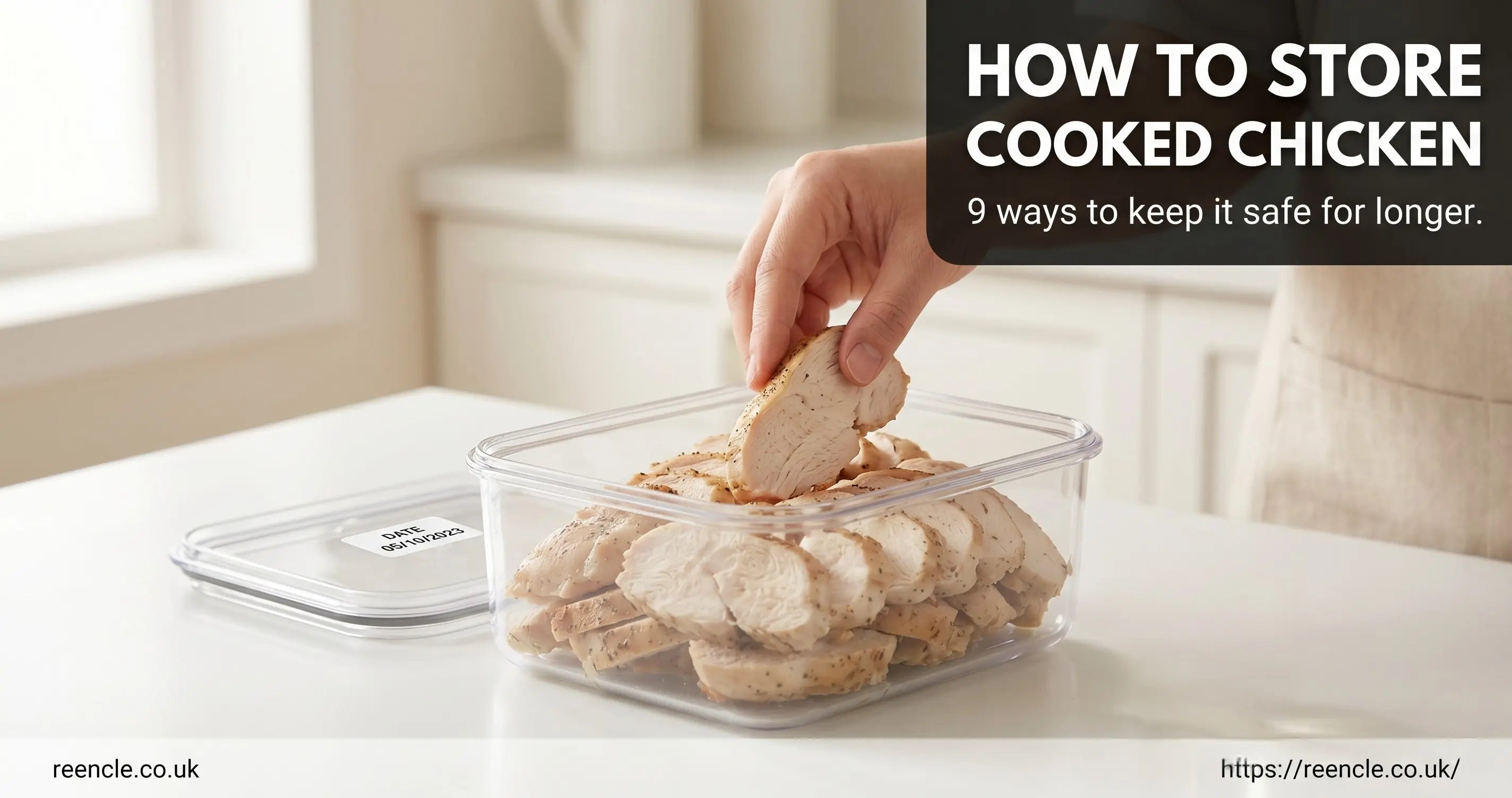
- Roast dinner remains: Bubble and squeak, pies, curries, or sandwiches. For chicken specifically, see our guide to storing cooked chicken safely.
General rule: refrigerate leftovers within two hours, eat within two days, or freeze them. If reheating, make sure the food is piping hot all the way through.
Shop Your Kitchen First
Before you head to the supermarket, spend two minutes checking what you already have. Open the fridge, scan the freezer, glance through the cupboards. This prevents duplicate buying and flags food that needs eating soon.
Create an "eat me first" shelf or box in your fridge. Anything with a short use-by date, anything already opened, or anything starting to look a bit tired goes here. Check this shelf before you plan meals for the week.
Use the "first in, first out" principle. When you unpack shopping, move older items to the front and put new items at the back. This is what supermarkets do, and it stops food getting buried and forgotten.
A quick photo of your fridge shelves on your phone before you leave the house is surprisingly effective. It stops those "did I already have butter?" moments in the dairy aisle.
Try Food Waste Apps
Several UK apps are designed specifically to tackle food waste, and most of them are free.
- Too Good To Go: Connects you with local restaurants, cafes, bakeries, and supermarkets that have surplus food at the end of the day. You buy a "magic bag" at a reduced price, usually around a third of the retail value, and collect it at a set time. It is a lucky dip, but the value is excellent.
- OLIO: A free sharing app. Neighbours and local shops list surplus food that anyone can collect for free. It works particularly well in urban areas. You might pick up bakery items, fresh produce, or home-cooked meals that would otherwise be binned.
- Kitche: Tracks what you buy by scanning your supermarket receipt. It sends reminders when items are approaching their use-by date, suggests recipes using what you have, and helps you see exactly how much you are wasting over time.
All three are available on iOS and Android and are widely used across the UK.
Compost What You Can't Save
Even with the best planning and storage habits, some food waste is unavoidable. Potato peelings, onion skins, eggshells, tea bags, coffee grounds, fruit cores, and vegetable trimmings are just part of everyday cooking.
Sending these scraps to landfill is the worst option. When food waste breaks down in landfill without oxygen, it produces methane, a greenhouse gas around 25 times more potent than CO2. UK food waste generates approximately 25 million tonnes of CO2-equivalent emissions every year.
Composting at home diverts that waste from landfill and turns it into something useful. If you are new to composting, our beginner's guide to home composting covers everything you need to get started. Traditional compost bins handle raw fruit and vegetable peelings well, but they cannot process cooked food, meat, dairy, or bones.
Indoor electric composters like the Reencle can process all food waste, including cooked leftovers, meat scraps, fish bones, and dairy. They break food down using microorganisms and produce usable compost in weeks rather than months, with no odour and no outdoor space needed. For a comparison of the top models available in the UK, see our best electric composter UK guide.
If your council offers a food waste collection service, use it. As of March 2026, all councils in England are required to provide separate food waste collections. But only 42% of UK households currently report having and actually using one, so check whether yours is available.
Quick Reference
10 Food Waste Tips at a Glance
| Tip | What to Do | Biggest Win |
|---|---|---|
| Plan your meals | Sketch 4–5 meals, write a list, stick to it | Stops overbuying |
| Check fridge temp | Set to 3–5°C (most run at 7°C) | Extends shelf life by days |
| Know date labels | Use-by = safety. Best-before = quality | Stops binning safe food |
| Store food correctly | Bread, potatoes, onions out of fridge | Doubles shelf life |
| Freeze more | Freeze on use-by date. Batch cook. Slice bread | Days become months |
| Measure portions | 75g pasta/rice per person. Serve less, offer seconds | Cuts plate waste |
| Use leftovers | Treat as ingredients for a new meal | Free meals |
| Shop your kitchen | Check fridge and cupboards before shopping | No duplicates |
| Food waste apps | Too Good To Go, OLIO, Kitche | Bargains + tracking |
| Compost the rest | Home composting or council food waste bin | Diverts from landfill |
The Real Cost of UK Food Waste
UK households waste around 6.4 million tonnes of food and drink every year, according to WRAP. That is roughly 70% of all UK food waste. And 73% of it was perfectly edible when it was thrown out.
The average household loses £470 a year to binned food. Across the country, edible household food waste costs over £17 billion annually. Put differently, the typical family throws away around 140 complete meals every year. For a deeper look at what this means for UK families, see our post on the real cost of family food waste.
The most wasted foods in British homes are potatoes (510,000 tonnes per year, nearly half of all potatoes bought), bread (around 900,000 tonnes), milk, composite meals like soups and stews, and chicken. WRAP's 2022 research found the top reasons were overcooked portions (25%), food that looked or smelled off (22%), personal preference (22%), and passing the date label (17%).
The environmental cost runs alongside the financial one. UK food waste produces approximately 25 million tonnes of CO2-equivalent emissions annually. When food rots in landfill without oxygen, it releases methane, which is around 25 times more potent than carbon dioxide as a greenhouse gas.
There are signs of progress. WRAP's 2025 Household Food Management Survey found that self-reported waste of four key items (bread, milk, chicken, and potatoes) fell from 21% in 2024 to 18.8% in 2025. And as of March 2026, all councils in England are now required to provide separate food waste collections under the Environment Act 2021. But awareness remains low. Only 42% of UK households report having and using a food waste collection, and just 33% recall seeing any guidance on how to reduce waste.
FAQ
Common Questions
What is the most wasted food in the UK?
Potatoes are the most wasted food in the UK by weight, with around 510,000 tonnes thrown away each year. That represents nearly half of all potatoes purchased. Bread is the second most wasted at approximately 900,000 tonnes per year, followed by milk and composite meals such as soups and stews.
How much does food waste cost the average UK household?
The average UK household wastes around £470 worth of food every year, according to WRAP. That works out to roughly 140 meals. Across the country, the total cost of edible food thrown away by households exceeds £17 billion annually.
What is the difference between use-by and best-before dates?
Use-by dates relate to food safety. Food should not be eaten after its use-by date as it may cause food poisoning. Best-before dates relate to quality. Food past its best-before date may not be at peak freshness, but it is generally safe to eat if it looks, smells, and tastes normal. Many UK supermarkets have removed best-before dates from fresh produce to reduce unnecessary waste.
Should I keep bread in the fridge?
No. Bread goes stale faster in the fridge because the cold temperature speeds up starch crystallisation. Store bread in a bread bin or cool, dry cupboard. If you will not finish a loaf within a few days, slice it and freeze it. You can toast slices straight from frozen.
Can I freeze food on its use-by date?
Yes. It is safe to freeze food right up to and including its use-by date. Once frozen, the use-by date no longer applies because bacteria cannot grow at freezer temperatures. Defrost in the fridge and eat within 24 hours of thawing. Do not refreeze raw food that has been defrosted unless you cook it first.
How can meal planning reduce food waste?
Meal planning means you buy only what you need for the meals you intend to cook. It prevents impulse purchases, reduces the chance of food going unused in the fridge, and helps you work through perishable items before they spoil. Planning four or five meals per week and writing a shopping list is enough to make a noticeable difference.
What apps help reduce food waste in the UK?
Three widely used UK apps are Too Good To Go (surplus food from shops and restaurants at reduced prices), OLIO (free food sharing between neighbours and local businesses), and Kitche (receipt scanning with use-by reminders and recipe suggestions). All three are free on iOS and Android.
What happens to food waste in landfill?
When food waste decomposes in landfill, it breaks down without oxygen and produces methane, a greenhouse gas approximately 25 times more potent than carbon dioxide. UK food waste generates around 25 million tonnes of CO2-equivalent emissions every year. Composting or using council food waste collections diverts this waste and allows it to be processed through anaerobic digestion or turned into compost.
The bottom line
Small changes to how you plan, shop, store, and cook can save you hundreds of pounds a year and keep tonnes of food out of landfill.
And the scraps? Potato peelings, banana skins, eggshells, chicken bones, coffee grounds, and forgotten leftovers can all go into a Reencle indoor composter, which handles cooked food, meat, and dairy that traditional compost bins cannot.
Explore the Reencle Composter →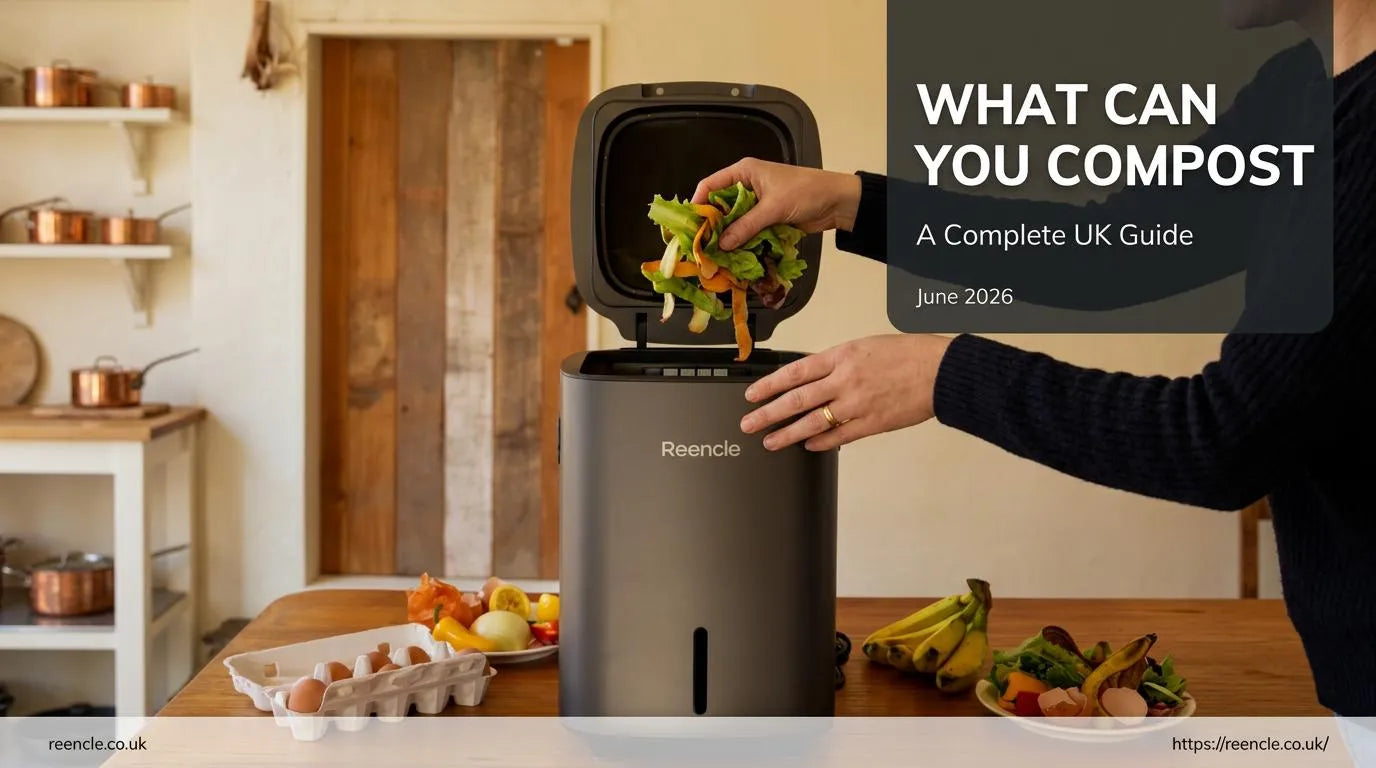

Leave a comment
This site is protected by hCaptcha and the hCaptcha Privacy Policy and Terms of Service apply.