
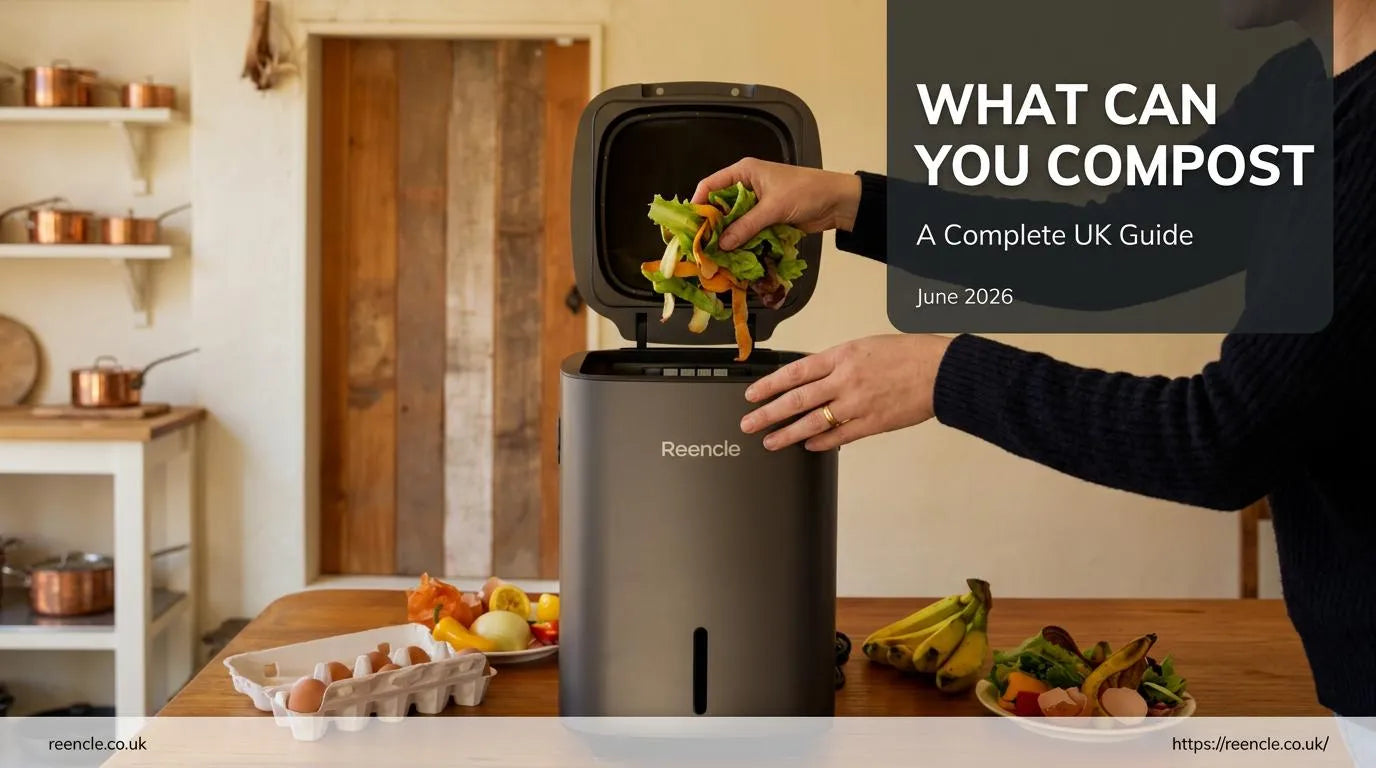
What Can You Compost? A Complete UK Guide to What Goes In (and What Stays Out)
UK households waste 6.7 million tonnes of food a year, and much of it could be composted. Here is exactly what belongs in your bin, what stays out, and how to get rich, crumbly compost faster.
 The average UK household throws away £470 worth of edible food every year (WRAP Food Tracker Survey 2024). Across the country, that adds up to 6.7 million tonnes of food waste annually, with roughly 40% of all household bin contents made up of compostable kitchen and garden waste. Composting is the most effective thing a UK household can do to cut its landfill contribution, reduce methane emissions, and get free soil conditioner for pots, borders and vegetable beds.
So what can you compost? It depends entirely on your setup. A traditional outdoor bin or heap handles raw plant matter beautifully, but it has firm limits. Home composting in a standard bin takes anywhere from 6 months to 2 years to produce finished compost, depending on what you add and how often you turn it. Electric composters such as Reencle lift many of those restrictions, letting you process meat, dairy and cooked food safely from your kitchen worktop.
Below is the full picture. I will walk you through the green and brown balance, the kitchen scraps that work in any system, the garden waste to avoid, and how electric composters open up composting to flats and households without outdoor space.
Contents

 Starchier items need a lighter touch. Stale plain bread, uncooked pasta and uncooked rice are fine in small quantities. Tear bread into chunks so it does not form a soggy lump, and bury starches deep in the pile to avoid attracting rodents.
Quick Reference
Quick Reference: Greens vs Browns
Use this table to sort your waste stream and choose the right composting method for your household.
Timeline reminder: Traditional outdoor bins take 6 months to 2 years to produce finished compost depending on turning frequency and weather (RHS). Electric composters such as Reencle process waste continuously and produce an output that requires roughly 30 days of curing before garden application.

FAQ
Common Questions
The bottom line
Ready to stop throwing money in the bin? The right composter turns almost any kitchen scrap into nutrient-rich matter, and you do not need a garden to do it.
And the scraps? Think about what hits your kitchen bin on an average week. The potato peelings from Sunday lunch. The coffee grounds from your morning cafetiere. That leftover roast chicken nobody touched. The fish bones from Friday's supper. Those cheese rinds piling up at the back of the fridge. It all adds up, and for the typical UK household it adds up to roughly £470 a year sitting in the rubbish (WRAP Food Tracker Survey 2024). A food waste composter handles the meat, dairy and cooked scraps that traditional outdoor bins cannot touch, so nothing edible need ever reach landfill again.
Explore the Reencle Composter →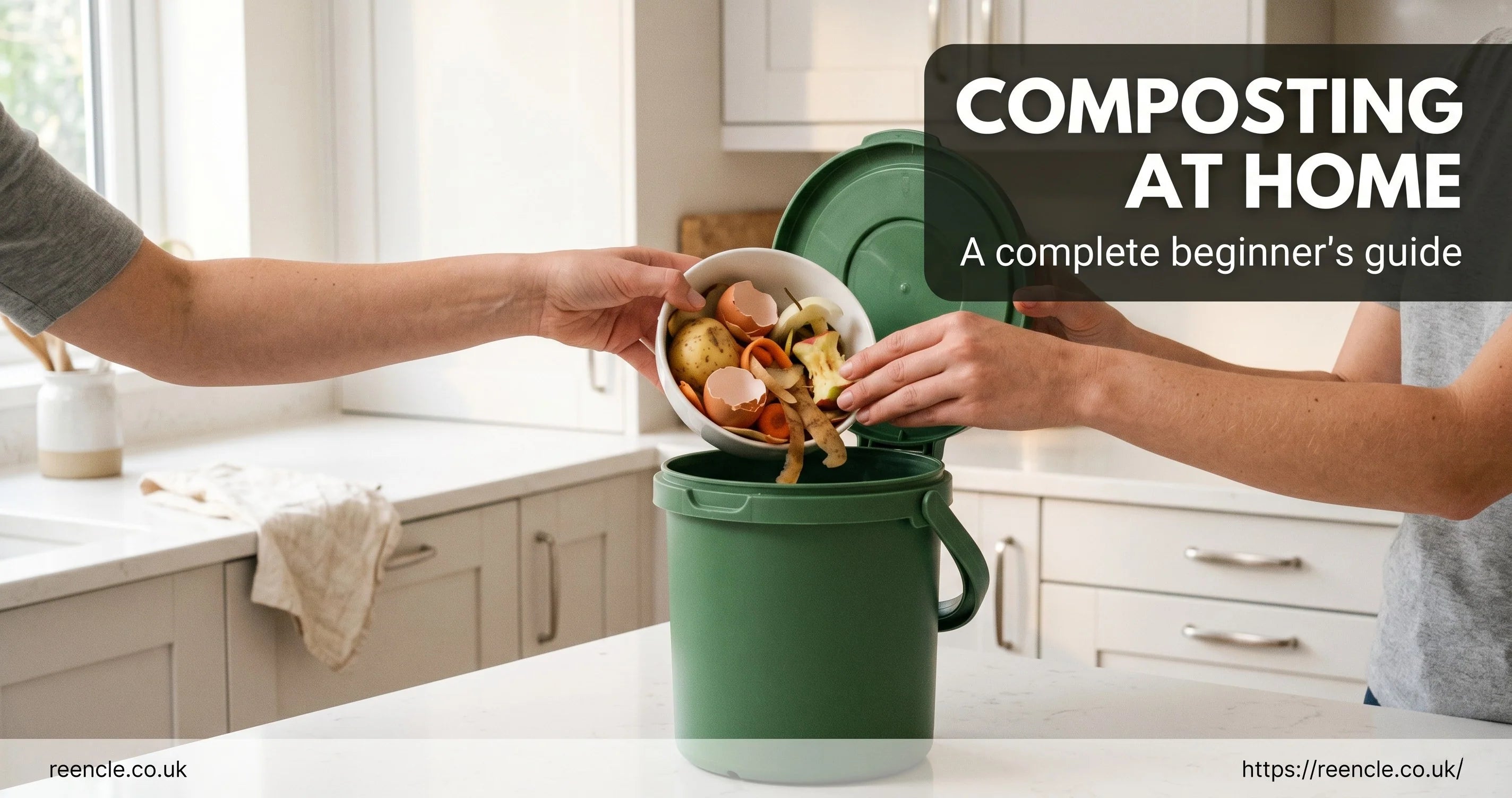

Leave a comment
This site is protected by hCaptcha and the hCaptcha Privacy Policy and Terms of Service apply.