
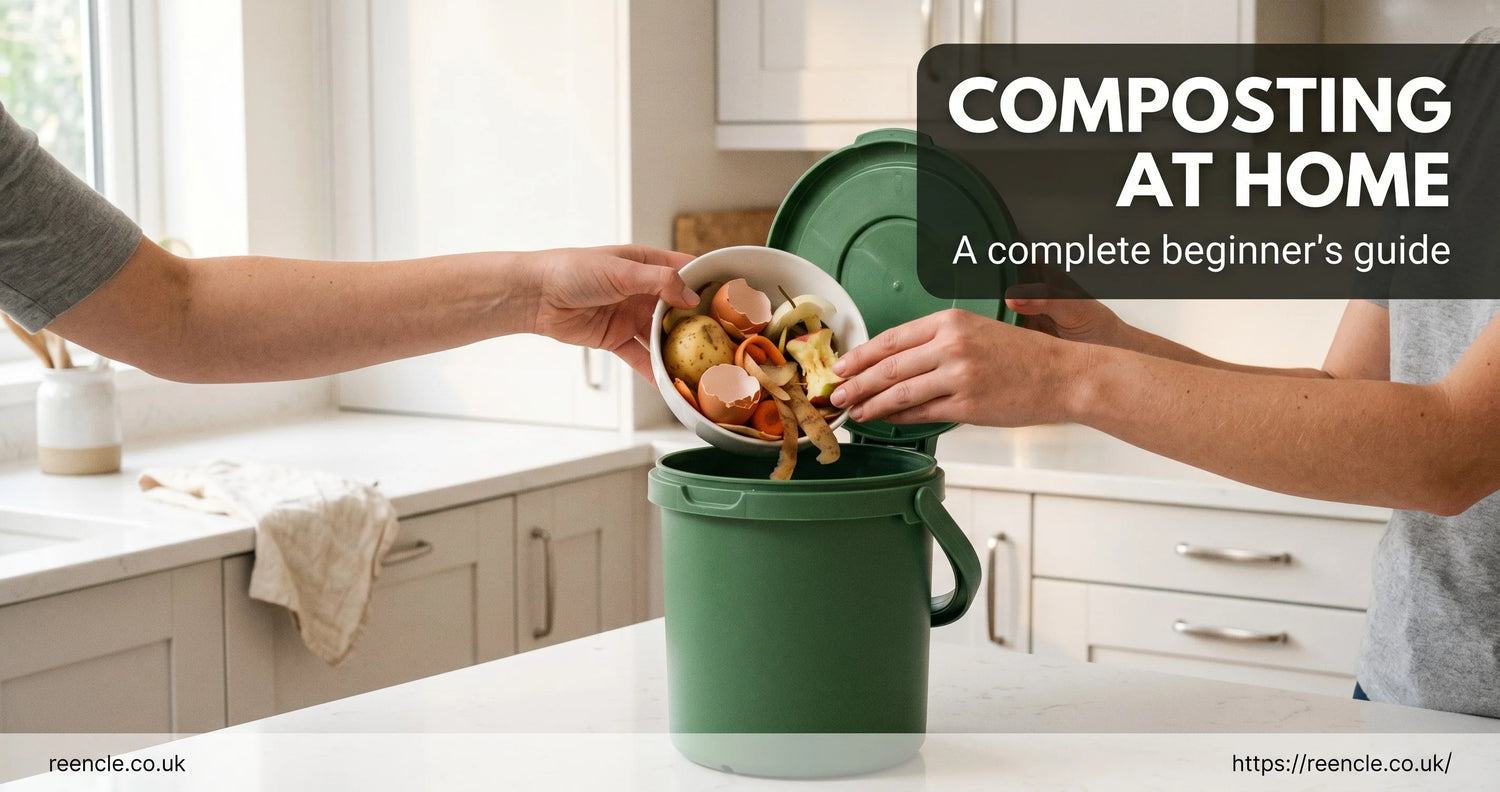
How to Start Composting at Home: A Complete Beginner's Guide
Everything you need to turn kitchen scraps and garden waste into free, nutrient-rich compost. From choosing a bin to using your first batch.
By the Reencle Team · 3 February 2026
 Most household waste bags contain something that never needed to go in there. Vegetable peelings, tea bags, egg shells, apple cores. All of it can be composted at home and turned into something genuinely useful for your garden.
According to WRAP, a home compost bin diverts around 150 kg of organic waste per household per year. That's roughly the weight of a full-grown adult, kept out of landfill every single year.
Here's everything you need to get started.
Contents
What Is Composting and How Does It Work?
Composting is how organic material gets broken down into something useful. Food scraps, garden waste, cardboard. Leave it long enough and it all becomes dark, crumbly soil improver.
Bacteria, fungi, worms, and other microorganisms do most of the work. You just need to give them the right conditions; they handle the rest.
The end product, called compost or humus, is rich in nutrients. Dig it into your soil and it improves structure, helps retain moisture, and feeds plants naturally. No shop-bought fertiliser needed.
It's not complicated. The basics are: organic material + moisture + air + a little time.
Choosing the Right Composting Method for Your Home
There are several ways to compost at home. The right one depends on how much space you have and what kind of waste you produce the most.
- Standard compost bin: The most common option for UK gardens. A plastic "Dalek-style" bin or a wooden bay in a corner of the garden. Handles raw fruit and vegetable peelings, garden waste, cardboard, and egg shells. Many UK councils offer subsidised bins. Check your council website before buying one. Best for most households with a garden.
- Compost heap: Works for larger gardens or allotments. It's slower than a bin because it loses heat and moisture more easily, so cover with a sheet or old carpet to retain warmth. A good low-effort option if you have plenty of garden waste to fill it.
- Wormery (vermicomposting): A compact bin that uses composting worms to break down kitchen scraps. Works well in small spaces and indoors. Can handle most raw fruit and vegetable scraps; avoid citrus in large quantities. A solid choice for flats or households with mainly kitchen waste.
- Bokashi: A fermentation system that pickles food waste in a sealed bucket using inoculated bran. Handles cooked food, meat, and dairy. The output needs a secondary composting step before it's garden-ready. Worth considering if you produce a lot of cooked food and want something compact for indoors.
- Electric food waste composter: A countertop or freestanding appliance that breaks down food waste rapidly, including cooked food, meat, and dairy, without the limitations of traditional composting. Output is usable much faster, typically within hours or days. It suits households with high amounts of cooked food waste or limited outdoor space. See the Reencle home composter for a UK option.
Setting Up Your Compost Bin: Step by Step
Once you have a bin or a spot for your heap, the setup takes about ten minutes.
- 1 Choose the location. Place the bin on bare soil if you can. This lets worms and insects travel up naturally. A partially shaded spot works well; full sun dries things out and deep shade slows decomposition. Make sure it's somewhere you'll actually visit regularly.
- 2 Lay a foundation layer. Start with a 5–10 cm layer of coarser brown material: small twigs, cardboard torn into pieces, or wood chips. This aids drainage and aeration at the base.
- 3 Add your first layers. Add a layer of greens (kitchen scraps, fresh grass clippings), then cover with an equal layer of browns (cardboard, dried leaves, scrunched-up paper). This is the basic pattern you'll repeat as you add waste over time.
- 4 Keep it moist but not wet. The compost should feel like a wrung-out sponge. In dry spells, add a little water. In very wet weather, cover the bin or heap with a lid or plastic sheet.
- 5 Turn it occasionally. Use a garden fork to turn the contents every few weeks. This introduces air, which speeds up decomposition significantly. A compacted, airless bin works much more slowly.
What to Put In (and What to Leave Out)
Get this wrong, and you'll either end up with a smelly bin or something larger living in it.
Can go in a standard outdoor bin
- Raw fruit and vegetable peelings, cores, and scraps
- Tea bags. Check for plastic mesh first; many brands now offer plastic-free versions.
- Coffee grounds and paper filters
- Egg shells, grass clippings, fallen leaves
- Garden prunings (chopped small)
- Cardboard and paper (torn up, not glossy), newspaper, kitchen roll tubes
- Hair and nail clippings, cut flowers
Cannot go in a standard outdoor bin
- Cooked food of any kind
- Meat or fish (raw or cooked)
- Dairy products (cheese, butter, yoghurt)
- Dog or cat faeces
- Diseased plants or perennial weeds (bindweed, couch grass) or weeds that have gone to seed
- Glossy or coated cardboard
Cooked food, meat, and dairy get excluded for two reasons: they attract rats and other pests, and standard outdoor bins don't get hot enough to break them down safely or kill pathogens.
Getting the Green/Brown Balance Right
The most important thing beginners get wrong is the ratio of greens to browns. Get it right, and your compost works quickly and smells neutral. Get it wrong, and you'll have a wet, smelly mess or a dry, inactive heap.
Greens are nitrogen-rich: vegetable and fruit scraps, fresh grass clippings, prunings, coffee grounds, tea bags. Moist by nature, they rot quickly. Browns are carbon-rich, dry, and fibrous. Cardboard, dried leaves, paper, wood chips, egg boxes. They decompose slowly and balance the moisture the greens bring in.
The target ratio is roughly 50:50 by volume. In practice, most kitchen-heavy composters add too many greens and not enough browns. If your bin smells like ammonia or looks soggy, add more brown material. If it looks dry and nothing is happening, add more greens or a little water.
A good habit: every time you add kitchen scraps, cover them with roughly the same volume of torn cardboard or scrunched newspaper. It takes seconds and keeps the bin balanced.
Troubleshooting: Common Problems and Fixes
Most composting problems have a simple fix once you know what's causing them.
- Smells like ammonia or rotten eggs: Too many greens, not enough air. Turn the bin and add a generous layer of browns. If you have grass clippings, mix them through rather than adding them in one thick layer.
- Looks dry, nothing is decomposing: Too many browns, not enough moisture. Add more kitchen scraps and a light watering. Turn the contents to mix everything thoroughly.
- Attracting flies: Fruit flies appear when there are too many exposed kitchen scraps near the surface. Bury scraps under browns rather than leaving them on top. A well-sealed lid helps.
- Attracting rats: Almost always caused by adding cooked food, meat, or dairy to an open bin. Stop adding them, and the problem generally resolves itself. If it persists, switch to a metal bin or a sealed compost tumbler.
- Bin looks full but not composting: The contents may have become compacted and lost airflow. Turn the whole lot with a fork, adding dry brown material as you go.
How to Know When Your Compost Is Ready
Finished compost looks, smells, and feels completely different from what went in. It's dark brown or near-black, crumbly, and earthy-smelling. Think of the forest floor after rain. You shouldn't be able to identify any of the original materials.
Timescale depends on how you manage the bin. A regularly turned, well-balanced bin can produce finished compost in 3–6 months. Leave a cold heap largely undisturbed, and you're looking at 9–12 months or longer.
If you can see recognisable bits of food or cardboard, it isn't ready. Leave it longer and turn it once more.
Most composters have a hatch or removable base panel at the bottom. Finished compost tends to collect there first, so that's the place to check.
How to Use Your Finished Compost
Once your compost is ready, here's how to use it.
- As a soil improver: Dig compost into your growing beds before planting. Aim for a 5–10 cm layer worked into the top 20–30 cm of soil. It adds organic matter, improves drainage in heavy clay soils, and helps sandy soils hold moisture.
- As a mulch: Spread a 5 cm layer over the surface of beds or around established plants. It suppresses weeds, conserves moisture, and feeds the soil slowly as it breaks down.
- As a potting mix component: Combine finished compost with topsoil and sharp sand for a basic potting medium. Use no more than 30–40% compost in the mix, as pure compost can be too rich for some plants.
- To top-dress your lawn: Apply a thin layer (1–2 cm) over the lawn surface in autumn. Work it into the grass with a brush. It improves the soil beneath without smothering the grass.
The average home composter produces around 280 litres of compost per year, enough to meaningfully improve several raised beds or a section of border planting.
Quick Reference
Greens vs Browns at a Glance
| Material | Type | Notes |
|---|---|---|
| Vegetable peelings | Green | Add freely |
| Fruit scraps and cores | Green | Add freely |
| Coffee grounds | Green | Excellent activator |
| Tea bags | Green | Check for plastic mesh |
| Grass clippings | Green | Mix through, don't pile |
| Fresh prunings | Green | Chop first |
| Dried leaves | Brown | Excellent; collect in autumn |
| Cardboard (plain) | Brown | Tear into pieces |
| Newspaper | Brown | Scrunch to prevent matting |
| Egg boxes | Brown | Good filler |
| Wood chips | Brown | Use sparingly |
| Egg shells | Neutral | Breaks down slowly; still beneficial |
| Cooked food | Avoid | Attracts pests in open bins |
| Meat/fish | Avoid | Attracts pests; pathogens |
| Dairy products | Avoid | Attracts pests in open bins |
The Composting Gap: Why Most Households in the UK Still Don't Do It
Only 3% of food waste in the UK is home composted, according to WRAP estimates. Given that over 30% of average household waste is organic and compostable, that gap is significant.
The most common reason isn't space or kit. It's not knowing where to start. Many people aren't sure what they can add, worry about smells or pests, or assume it's more complex than it actually is.
A basic compost bin requires very little management. Add materials, keep the ratio roughly balanced, turn it now and then. That's genuinely it. The average home composter produces around 280 litres of usable compost per year, enough to make a genuine difference to a garden without spending a penny on commercial products.
FAQ
Common Questions
How long does compost take to be ready?
In a regularly turned, well-managed bin with a good green/brown balance, compost can be ready in 3–6 months. A cold heap with minimal turning may take 9–12 months or longer. Check the base of the bin first. Finished compost collects there before the rest is ready.
What can I put in a compost bin?
Raw fruit and vegetable scraps, egg shells, coffee grounds, tea bags, grass clippings, garden prunings, fallen leaves, plain cardboard, and newspaper all work well. Avoid cooked food, meat, fish, dairy, and cat or dog faeces in a standard outdoor bin.
Why does my compost smell bad?
A smelly bin usually means too many greens and not enough air. Turn the contents with a fork and add a generous layer of torn cardboard or dried leaves. Avoid adding cooked food or meat, which are the most common causes of serious odour problems.
Can I compost without a garden?
Yes. A wormery works well indoors or on a balcony. A bokashi system handles kitchen waste (including cooked food) in a sealed countertop bucket. Both can be set up in a flat with no outdoor space at all.
How do I know when compost is ready to use?
Finished compost is dark brown or black, crumbly, and smells earthy. If recognisable bits of food or cardboard are still visible, leave it longer and turn it once more.
The bottom line
Starting a compost bin is one of the most practical things you can do to reduce household waste. A few square feet of garden space and a basic bin are all it takes to turn kitchen scraps into something genuinely useful.
And the scraps you can't compost? Traditional outdoor bins handle raw peelings, garden waste, and egg shells well. But every household also generates cooked food, meat scraps, dairy, and leftovers. That's where the bin takes over by default. A Reencle electric composter processes all of it indoors, without the pest risk, and turns it into compost within hours. Nothing goes to landfill that doesn't have to.
Discover the Reencle Composter →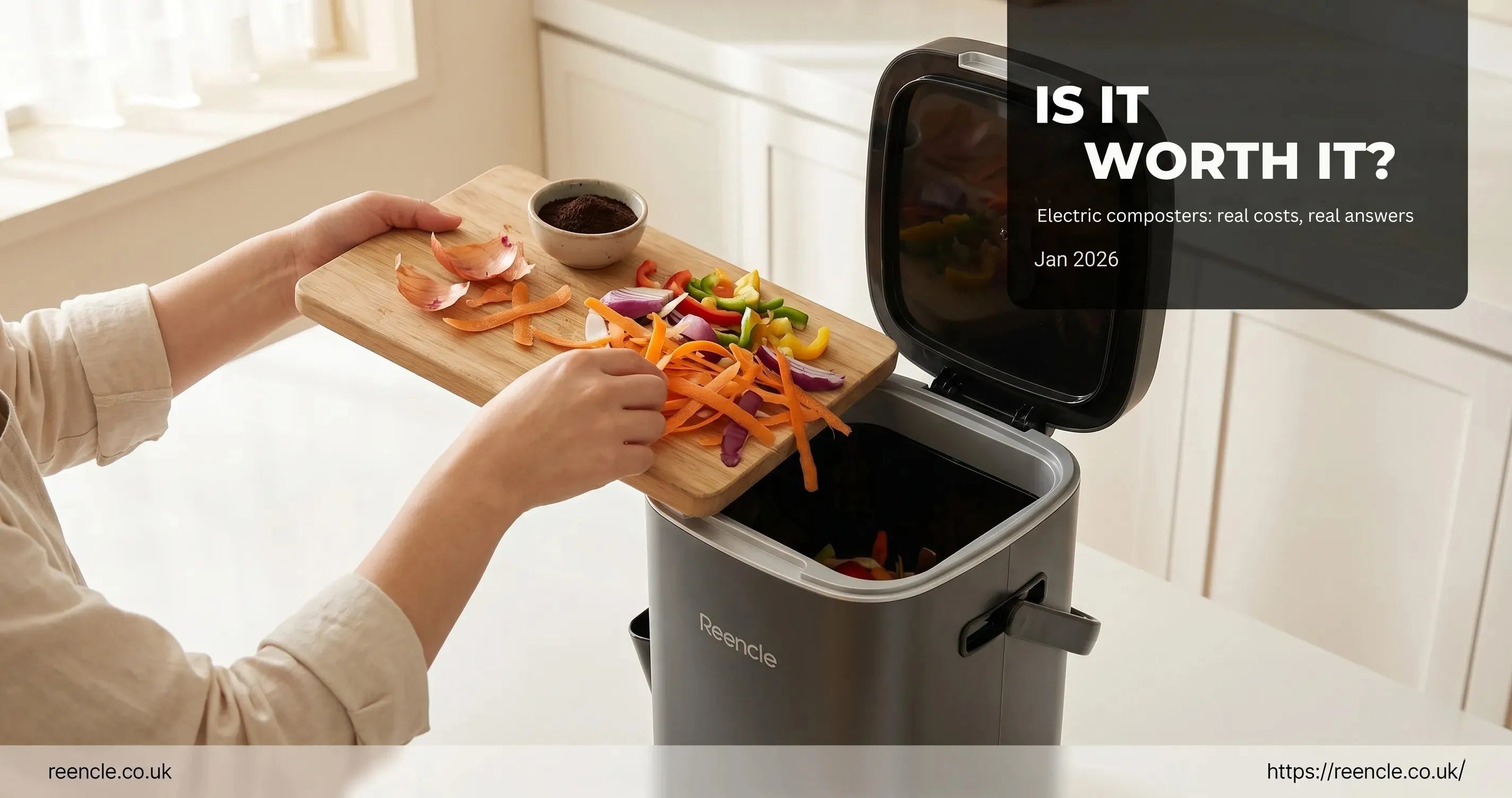

Leave a comment
This site is protected by hCaptcha and the hCaptcha Privacy Policy and Terms of Service apply.