
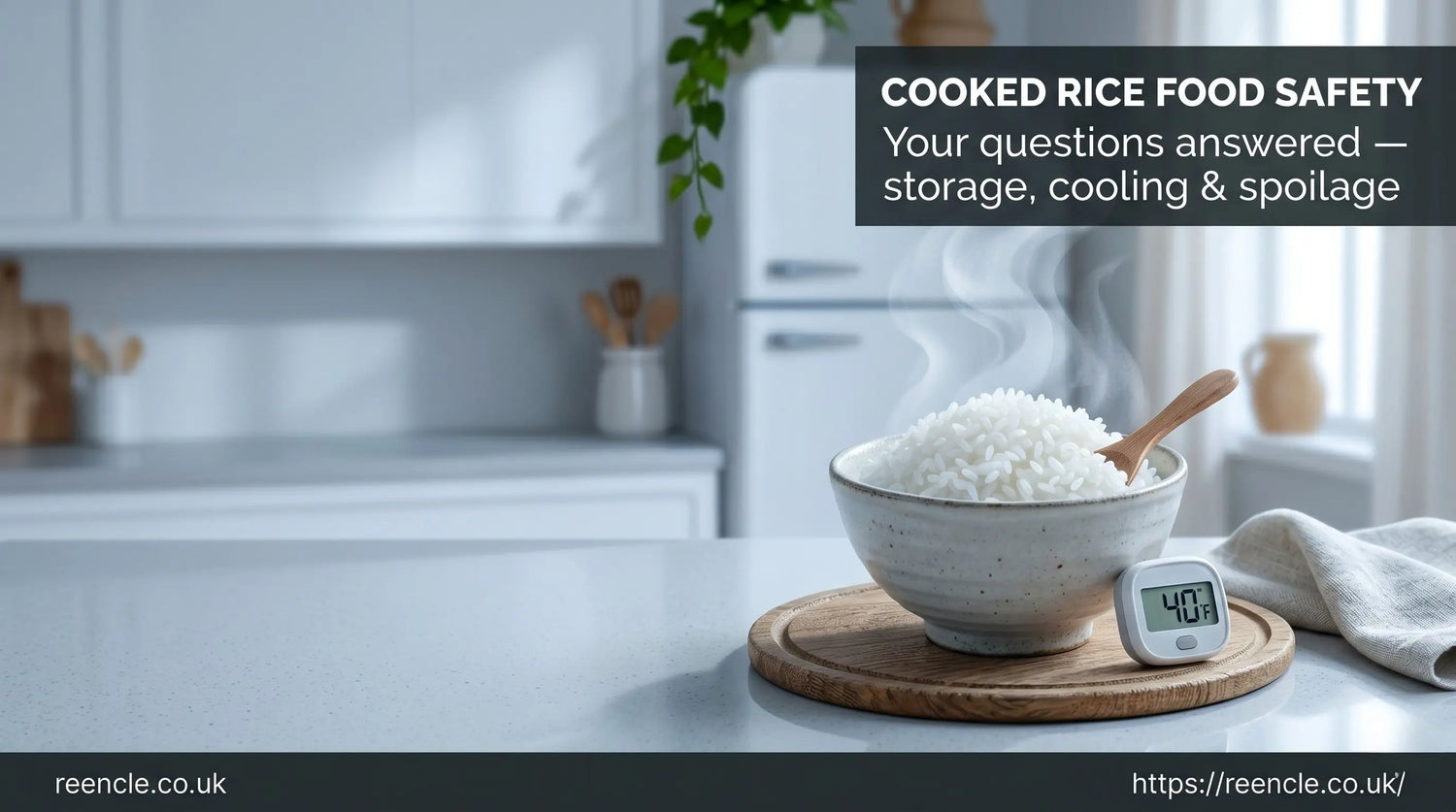
Cooked Rice Safety: Your Questions Answered
Cooked rice lasts 3 to 5 days in the fridge — but the real risk isn't what most people think. Here's what you actually need to know.

No — discard it. Rice left at room temperature for more than 2 hours enters the danger zone (40–140°F) where Bacillus cereus spores germinate and produce toxins. The emetic toxin from B. cereus resists heat, so reheating won't save it.
Bacillus cereus is a spore-forming bacterium found in soil and cooked rice. It survives the cooking process, then germinates when rice sits warm. The toxins it produces cause vomiting within 1 to 6 hours, typically resolving in 24 hours — but the experience is unpleasant.

Cooked rice is good for 3 to 5 days in the fridge. Use the 3-day window if you're unsure about your fridge temperature or if the rice took longer than an hour to cool. The full 5 days applies only to rice that cooled quickly and is stored at 40°F or below.
Brown rice degrades faster than white due to its higher oil and fiber content — use it within 3 days. White, jasmine, basmati, and wild rice all follow the same 3-to-5-day rule.
Rice dishes with meat or eggs should be eaten within 3 to 4 days. The most perishable ingredient in the dish sets your timeline.
Speed is everything. Rice must cool below 70°F within 2 hours and reach below 40°F within 4 hours (FDA Food Code standard).
- Spread rice on a shallow sheet pan or wide dish — increased surface area lets heat escape fast
- Divide large batches into several small containers; smaller masses cool much faster
- Use an ice bath: place containers in ice water for 15 to 20 minutes before refrigerating
- Leave the lid loose or off until rice hits room temperature, then seal and refrigerate
- Never cover hot rice in a sealed container — trapped steam slows cooling

Brown rice still has its bran and germ layers, which contain natural oils. These oils go rancid over time, creating a stale or musty smell. For quality and safety, use cooked brown rice within 3 days. White rice has the bran removed, so it stays fresh longer in the fridge.
Yes — freezing is one of the best moves for meal prep. Cooked rice freezes for 1 to 2 months at best quality (it stays safe indefinitely at 0°F, but quality declines).
- Cool rice completely first
- Portion into meal-sized amounts in freezer bags or containers
- Flatten bags to save space and speed thawing
- Label with the date and freeze immediately — don't refrigerate first and freeze days later
To reheat from frozen: add 1 tablespoon of water per cup of rice, cover loosely, and microwave in 1-minute bursts, stirring between cycles, until it reaches 165°F. Or steam on the stove with a bit of added water.
Uncooked white rice lasts 4 to 5 years in a cool, dry airtight container. White rice has had its bran and germ removed, so it lacks the oils that cause rancidity. Under ideal long-term storage conditions (sealed containers with oxygen absorbers), it can last 25 to 30 years, though flavor and nutrition decline.
Store in an airtight glass or hard plastic container, away from heat and direct light. A cool pantry below 70°F is ideal. Thin paper or plastic bags from the store won't cut it — they let moisture and pests in.
Brown rice keeps the bran and germ layers, and those contain oils that oxidize and turn rancid. Uncooked brown rice lasts only 3 to 6 months at room temperature. In the fridge, it extends to 6 to 12 months. Frozen, it lasts 12 to 18 months. If you buy brown rice, store it sealed and use it sooner rather than later.
- A sour or "off" smell — means bacterial growth, discard it
- Slimy or wet texture — spoilage
- Hard, dried-out rice with an off smell — throw it out
- Visible mold — the whole batch goes
- Anything past 5 days — discard regardless of how it looks or smells
The main tell is smell and texture, not appearance alone. Time is your best safety indicator.
This is called retrogradation. The starch in cooked rice recrystallizes when chilled, making it firmer than fresh rice. It's a quality change, not a safety issue. Add a tablespoon of water when reheating to restore moisture and soften the texture.
From a safety standpoint, yes — rice can be reheated multiple times if it reaches 165°F each time and is refrigerated between reheats. But each cycle dries the texture further and creates more cooling windows where bacteria could grow.
The best practice is to cook only what you'll eat and reheat just what you need at that meal.
Fried rice syndrome is Bacillus cereus food poisoning, historically linked to fried rice because large batches were cooked, cooled slowly at room temperature, then fried the next day — perfect conditions for B. cereus spores to germinate and produce toxins.
Symptoms hit within 1 to 6 hours: vomiting, sometimes diarrhea, usually resolved in 24 hours. It's entirely preventable with fast cooling and proper refrigerated storage.
| Situation | Duration |
|---|---|
| Cooked rice in the fridge | 3–5 days |
| Cooked rice at room temp | 2 hours max |
| Cooked rice in the freezer | 1–2 months |
| Uncooked white rice in pantry | 4–5 years |
| Uncooked brown rice in the pantry | 3–6 months |
The rule that matters most
Refrigerate cooked rice within 2 hours, keep it at 40°F or below, and use it within 5 days. Reheating won't save rice that sat out too long — fast cooling is your only protection against B. cereus toxins.

Leave a comment
This site is protected by hCaptcha and the hCaptcha Privacy Policy and Terms of Service apply.