
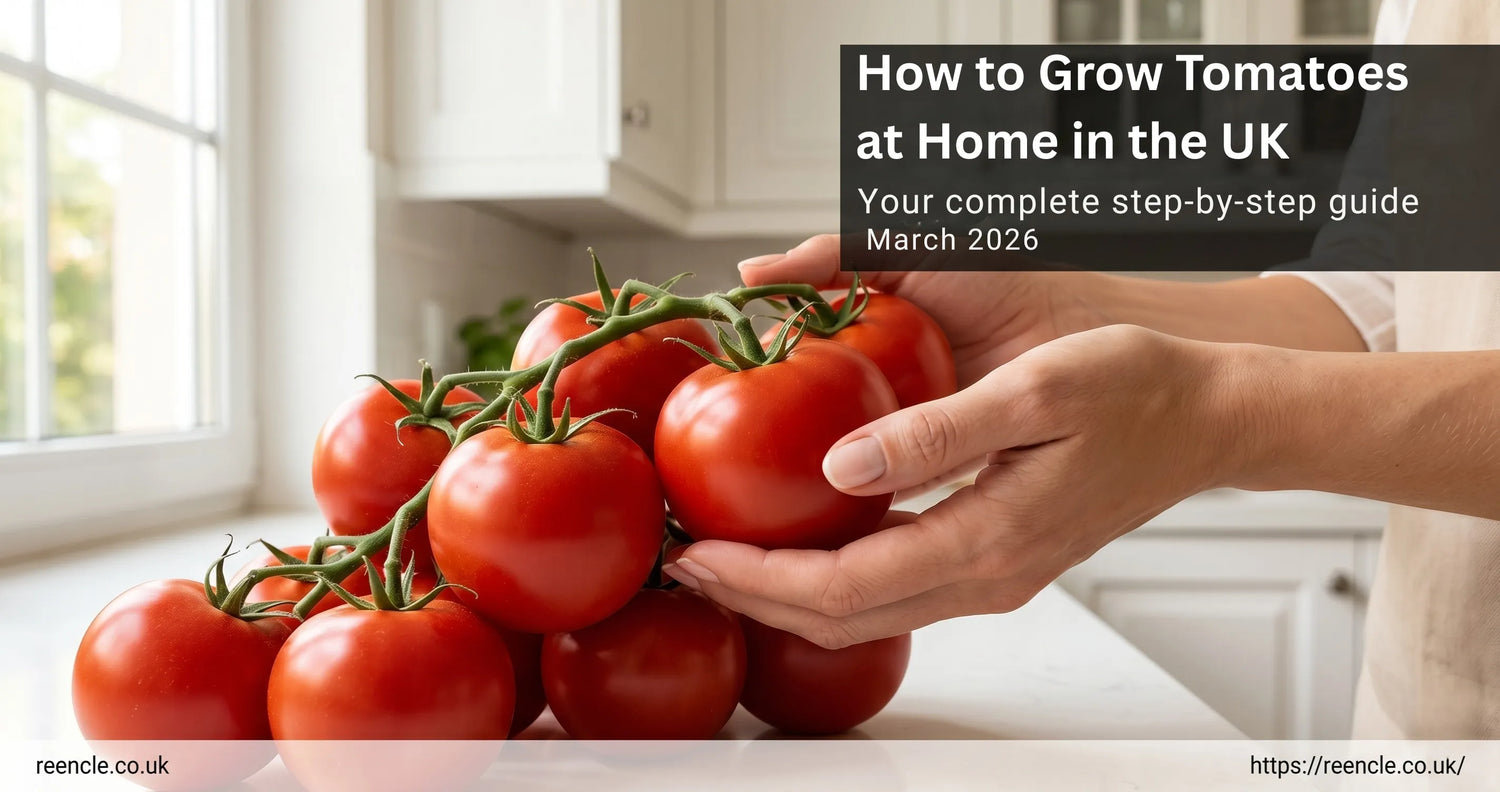
How to Grow Tomatoes at Home in the UK
Growing your own tomatoes in the UK is one of the most rewarding things you can do in a garden, on a patio, or even on a sunny windowsill. This guide covers everything from choosing the right variety for our cool climate to harvesting a bumper crop.
 Few crops repay the effort quite like a home-grown tomato. When you grow tomatoes in the UK, you step into a long tradition. The challenge of coaxing a sun-loving Mediterranean plant through a British summer is part of the appeal. With the right variety, a bit of warmth, and consistent watering, most UK households can produce a generous harvest from June through October.
The RHS describes tomatoes as one of the most popular crops to grow at home, and according to the RHS State of Gardening Report 2025, RHS Retail saw a 14 per cent uplift in sales of tried-and-tested varieties such as Shirley and Sungold in 2025, pointing to a growing enthusiasm for home-grown produce. With 36 per cent of UK adults now growing their own herbs, fruit, or vegetables at home, getting started with tomatoes is both timely and practical.
Choose the Right Tomato Variety for the UK Climate
Tomatoes come from warm, dry climates, so variety choice matters enormously when you grow them in the UK. Pick a cultivar bred or proven for cooler temperatures and a shorter season, and you dramatically improve your chances of a decent harvest, even in a mediocre British summer. If you are also planning what else to sow this year, our guide to 10 vegetables that actually grow well in the UK covers companion crops worth growing alongside your tomatoes.
Cordon (Vine) Varieties
Trained as a single stem, side shoots removed
| Variety | Description & Growing Qualities |
|---|---|
| Gardener's Delight | A cherry tomato and the most widely grown outdoor variety in the UK. Sweet, prolific, split-resistant, and reliable in unheated greenhouses and warm sheltered outdoor spots (GardenFocused.co.uk). |
| Moneymaker | A classic British favourite producing medium-sized, round, red fruits in large quantities even in poor summers. An excellent all-rounder (GardenUK). |
| Shirley F1 | The RHS regards Shirley as the safest choice for unheated greenhouses. It crops early, resists disease, and tolerates cool nights better than most (GreenhouseStores.co.uk). |
| Sungold F1 | An orange cherry tomato with exceptional sweetness. Crops heavily and performs well under glass. Sales surged 14 per cent in 2025 (RHS State of Gardening Report 2025). |
| Crimson Crush F1 | The best outdoor tomato for UK wet summers. It carries stacked blight-resistance genes that allow it to crop reliably when standard varieties would collapse (GardenUK). |
Bush (Determinate) Varieties
Branch naturally, no side-shoot removal needed
| Variety | Description & Growing Qualities |
|---|---|
| Tumbling Tom | A trailing cherry variety ideal for hanging baskets. High-yielding, requires no support, produces orangey-red fruits around 16 to 18 weeks after sowing (GrowVeg). |
 For beginners, start with Gardener's Delight (outdoor/unheated greenhouse) or Shirley F1 (greenhouse). For a wet-summer garden, add Crimson Crush F1 for blight resistance.
When to Sow and Plant Out in the UK
Timing is one of the most common pitfalls for UK tomato growers. Sow too early and plants become tall, leggy, and stressed waiting for warmth. Sow too late and you lose valuable growing weeks.
The RHS recommends sowing between late February and mid-April depending on your setup layout:
| Setup Type | Sowing Timeline & Direct Instructions |
|---|---|
| Heated greenhouse / propagator | Late February to early March, at 18 to 21 degrees Celsius. Germination takes 7 to 14 days. |
| Unheated greenhouse / polytunnel | Mid-March indoors, transplanting into the unheated structure from late April once nights consistently hold above 10 degrees Celsius. |
| Outdoors | Late March to early April. Plant out after the last frost, typically 15 to 25 May in southern England and late May to early June in the north (GardenAndAllotment.com). |
 Sow seeds 6mm deep into small pots or modules of seed compost. Cover with a propagator lid or cling film to retain warmth. Once seedlings emerge, remove the cover and move to the brightest spot available. Transplant into 7.5cm pots at the first true leaves, then into 12cm pots as roots fill the compost. Harden off outdoor plants over 10 to 14 days before final planting.
Sow from late February (heated greenhouse) to early April (outdoors). Plant out after the last frost date for your region, with plants 20 to 30cm tall and showing the first flower truss.
Growing Indoors, in a Greenhouse, or Outdoors
Where you grow your tomatoes makes a real difference in the UK.
For most UK gardeners, an unheated greenhouse or polytunnel is the best option going. An unheated greenhouse extends the growing season from roughly April to October, giving 8 to 12 more weeks of harvest than outdoor growing (GreenhouseStores.co.uk). Plants produce larger crops, start earlier, and stay protected from blight. Open vents and doors on warm days to prevent overheating and help pollination along.
Outdoor growing works across most of England, particularly in the south and east. Choose the warmest, most sheltered spot you have. A south-facing wall is ideal. In northern England, Scotland, and Wales, the shorter season and cooler temperatures make blight-resistant or fast-maturing varieties particularly important (GrowVeg.co.uk). Never plant out until all frost risk has passed.
A sunny south-facing windowsill suits compact bush varieties like Tumbling Tom well. Bear in mind that indoor plants receive roughly a third of the light available in an unshaded greenhouse (GrowVeg.co.uk). Tap flower trusses gently each day to help pollination without insects.
A greenhouse or polytunnel gives the best UK results. For outdoor growing, choose a south-facing sheltered spot and opt for blight-resistant varieties.
Soil, Compost, and Container Setup
Tomatoes are hungry plants that respond well to rich, moisture-retentive growing conditions.
Dig in plenty of garden compost or well-rotted manure before planting. Understanding how compost benefits plants will help you get the most from every bag or bin you produce. Avoid growing tomatoes in the same patch two years running. Soil-borne diseases including blight, can overwinter and re-infect next year's crop (RHS).
Most UK home growers use 10 to 15 litre containers or standard grow bags. Grow bags dry out quickly, so place a ring waterer on top to direct water to the roots. Use a peat-free multi-purpose or tomato-specific compost. When planting, bury the stem slightly deeper than it was growing. Tomatoes produce additional roots along any buried stem, which makes for a stronger plant.
 Allow 45 to 60cm between cordon plants and 60 to 90cm for large outdoor bush varieties.
Rich, free-draining compost suits tomatoes well. Grow bags are practical but dry out fast. Never repeat tomatoes in the same soil without a break.
Watering Your Tomato Plants
Consistent watering is one of the most important habits to build. Irregular watering is the single most common cause of blossom end rot, fruit splitting, and diluted flavour.
The RHS advises watering container-grown tomatoes daily in hot weather and every two to three days in cooler periods. In the ground, watering twice a week during dry spells is usually sufficient. Check the compost or soil regularly rather than watering on a fixed schedule.
Always water at the base of the plant, never over the leaves. Wet foliage in warm weather creates exactly the humid conditions that tomato blight (Phytophthora infestans) needs to spread (RHS). A drip system or seep hose is ideal for consistent delivery.
Apply a 5 to 7cm layer of garden compost or bark mulch around the base of outdoor plants to slow moisture loss, reduce wet-dry cycles, and suppress weeds.
Water regularly at the base of the plant. Container plants may need watering every day in summer. Inconsistent watering causes most fruit quality problems.
Feeding Tomatoes for a Good Harvest
Tomatoes are one of the most nutritionally demanding crops you can grow. Once fruiting begins, regular feeding is not optional.
Wait until the first truss of fruit has set before feeding. Earlier feeding encourages lush leafy growth at the expense of fruit.
Use a high-potash liquid tomato feed such as Tomorite, Chempak No. 4, or an organic seaweed and potash blend. The RHS recommends feeding container plants every 10 to 14 days with a high-potassium fertiliser once the first fruits start to swell, and a fortnightly feed for ground-grown plants to increase yields. Many growers feed weekly through the peak summer months.
Potassium deficiency contributes to greenback, the failure of tomato shoulders to ripen evenly. A regular tomato-specific feed addresses this directly. Avoid high-nitrogen general fertilisers once plants are fruiting. Too much nitrogen produces large leafy plants with fewer tomatoes.
Begin feeding when the first truss sets. Use a high-potash tomato feed every one to two weeks. Container plants need more frequent feeding than ground-grown ones.
Supporting, Pinching Out, and Training
Managing your plants well shapes both the size and speed of your harvest.
Cordon varieties such as Moneymaker, Shirley, Gardener's Delight, and Sungold are trained as single-stemmed plants. Small shoots appear in the leaf axils, the V-shaped junction between main stem and leaf. Remove these side shoots when they reach 2.5 to 5cm by pinching firmly with thumb and forefinger. Do this at least weekly through summer (SimplySeed). Tie the main stem loosely to a sturdy cane or vertical string as it grows.
In late July or August, pinch out the growing tip, leaving two or three leaves above the final flower truss. The UK season is short. Stopping redirects the plant's energy into ripening existing fruit rather than setting new trusses that won't mature before autumn (BBC Gardeners World).
Bush varieties such as Tumbling Tom branch naturally. Do not remove side shoots. This branching carries the crop. Provide a supporting cane if the plant becomes heavy with fruit.
Pinch out side shoots on cordon varieties weekly and stop plants in late July. Never remove the natural branching of bush varieties.
Common Tomato Problems and How to Deal With Them
Even careful growers encounter problems. Here are the most common issues in UK gardens.
Tomato Blight (Phytophthora infestans)
Blight is the most serious threat to outdoor UK tomatoes. It spreads via airborne spores when humidity exceeds 90 per cent and temperatures stay between 10 and 25 degrees Celsius for 48 hours (RHS). Those conditions are common from July onwards.
Symptoms
| Affected Area | Blight Symptoms Details |
|---|---|
| Leaves | Dark brown or black patches on leaves starting at tips and edges. White fungal growth visible on leaf undersides in highly humid conditions. |
| Stems | Dark brown streaks appearing down the main framework or vine stems. |
| Fruit | Firm, spreading brown patches on the fruit surfaces that quickly collapse and rot. |
 Prevention
| Method | Actionable Guidelines |
|---|---|
| Resistant Cultivars | Choose Crimson Crush, Mountain Magic, or Losetto. |
| Watering Technique | Water directly at the base only; never sprinkle or wet the canopy foliage. |
| Plant Spacing | Space plants far enough apart to encourage heavy airflow through the leaves. |
| Copper Fungicide | Apply protective Bordeaux mixture treatment proactively from late June. |
| Crop Rotation | Rotate your crops annually and never reuse old affected compost soil. |
Once blight appears, there is no cure. Remove and burn affected plants immediately (GardenFocused).
Warning: Do not compost any plant material showing blight. Spores persist and spread.
Blossom End Rot
A dark, leathery patch on the bottom of the fruit. Caused by inconsistent watering that prevents calcium from reaching developing fruit (RHS). Fix: water more consistently, mulch around plants. Calcium-based foliar sprays can help short-term.
Greenback
Shoulders remain hard, green, or yellow while the rest of the fruit ripens. Caused by too much direct sun, high temperatures, or low potassium levels. Prevent by shading plants during heat waves, ensuring good ventilation, and maintaining a regular high-potash feeding programme (The Scientific Gardener).
Fruit Splitting
Caused by irregular watering, particularly after a dry spell followed by heavy rain or overwatering. Maintain consistent soil moisture and harvest fruit as soon as it ripens.
Blight is the biggest outdoor risk from July onwards. Choose resistant varieties, water at the base, and apply preventive copper fungicide from late June. Most other problems trace back to inconsistent watering.
Harvesting and Using Your Tomatoes
Depending on variety and growing method, UK tomatoes begin ripening from late June (early greenhouse crops) through to October. Outdoor tomatoes typically peak from August.
Pick tomatoes when fully coloured and giving slightly under gentle pressure. Do not wait for them to soften. Pick regularly to encourage the plant to keep setting and ripening fruit. Cherry varieties do better when picked frequently rather than left to accumulate on the plant.
Green tomatoes left at the end of the season won't ripen outdoors once temperatures drop. Bring the whole plant indoors and hang it upside down in a warm room, or pick green tomatoes and place them in a paper bag with a ripe banana. The ethylene the banana produces helps them ripen gradually over one to two weeks.
Home-grown tomatoes are best eaten at room temperature. Cold dulls their flavour. Use fresh in salads, sauces, and soups. Gluts freeze well whole. They lose texture but retain flavour, and make excellent passata. Chutney is a good use for green or end-of-season fruit.
Pick regularly and at full colour. Ripen end-of-season green tomatoes indoors with a banana. Freeze or make passata from any glut.
UK Tomato Growing Calendar
| Month | Task |
|---|---|
| February | Sow seeds indoors with heat (18-21 degrees Celsius). Heated greenhouse or propagator. |
| March | Sow for unheated greenhouse and outdoor crops. Pot on early seedlings. |
| April | Pot on into larger containers. Plant into unheated greenhouse from late April. |
| May | Harden off outdoor plants. Plant out after last frost (mid-late May south, June north). |
| June | Train, tie in, pinch out side shoots weekly. Start high-potash feed once first truss sets. |
| July | Water daily in heat. Apply copper fungicide. Watch for blight. Stop plants late July. |
| August | Main outdoor harvest begins. Continue feeding. Pick regularly. |
| September | Continue harvesting. Remove lower leaves for airflow. Remain vigilant for blight. |
| October | Bring in green tomatoes to ripen indoors. Clear plants. Compost healthy material. |
UK Home Veg Growing Is on the Rise
 According to the RHS State of Gardening Report 2025, RHS Retail saw a 14 per cent uplift in sales of tried-and-tested tomato varieties such as Shirley and Sungold in 2025, suggesting that a warmer summer drove renewed enthusiasm for home tomato growing. The report also found that over 34 million UK adults garden regularly, and 36 per cent of adults are growing their own food at home. Younger households are driving much of this growth: 43 per cent of under-40 gardeners now grow food at home.
Frequently Asked Questions
When is the best time to plant tomatoes in the UK?
Plant outdoors after the last frost, typically mid to late May in southern England and early June further north. For unheated greenhouses, late April is usually safe. Sow seeds indoors from late February (with heat) to early April depending on your growing setup and location.
Can I grow tomatoes outside in the UK?
Yes, though success depends on variety and location. A warm, sheltered, south-facing spot is essential. Choose blight-resistant varieties such as Crimson Crush or fast-maturing cherry types like Gardener's Delight. In northern England, Scotland, and Wales, a greenhouse or polytunnel delivers more reliable results than open ground.
Why are my tomato leaves curling?
Upward leaf curl in lower leaves is often a normal response to heat and water stress, particularly in hot weather. Ensure consistent watering and check that roots are not waterlogged. Downward curl can indicate overwatering, a virus, or herbicide drift. If discolouration or distortion accompanies the curl, investigate the plant further for pests or disease.
What is the best tomato variety for UK beginners?
Gardener's Delight is widely recommended as the best starting point. It is prolific, sweet, resistant to splitting, and treats cooler conditions well. Shirley F1 is the best choice for an unheated greenhouse. For hanging baskets or containers, Tumbling Tom requires the least maintenance of any variety.
How often should I water tomatoes in the UK?
Container and grow-bag tomatoes need watering every day in hot weather and every two to three days in cooler conditions. Ground-planted tomatoes need watering twice a week during dry spells. Always water at the base of the plant, not over the leaves. Inconsistent watering is the leading cause of blossom end rot and fruit splitting.
How do I prevent tomato blight in the UK?
Choose blight-resistant varieties such as Crimson Crush, Mountain Magic, or Losetto. Water at the base of the plant only. Space plants well for airflow. Apply a preventive copper fungicide (Bordeaux mixture) from late June, before any symptoms appear. Never grow tomatoes in the same soil two consecutive years. Growing under glass reduces blight risk significantly compared with outdoor growing.
The bottom line
Growing your own tomatoes gives you better-tasting fruit and a steady supply of green plant waste all season, and all of that organic material can go back into your garden rather than into the bin.
And the scraps? Side shoots pinched out weekly, lower leaves removed for airflow, and the stems and roots cleared in October are all rich in plant matter. Overripe or cracked tomatoes compost well too. The Reencle food waste composter breaks tomato scraps, plant trimmings, and kitchen waste down continuously and quietly on your worktop. Our guide to seasonal gardening with the Reencle shows how to keep the garden-to-compost-to-garden cycle short and clean.
Explore the Reencle Composter →

Leave a comment
This site is protected by hCaptcha and the hCaptcha Privacy Policy and Terms of Service apply.